
Halloween Pet Safety: 10 Tips for Dogs & Cats
Halloween Pet Safety: 10 Tips for Dogs & Cats
A practical first-Halloween guide for new U.S. pet owners
Your pet’s first Halloween does not have to be stressful. The biggest changes are usually the things your dog or cat doesn’t experience on an ordinary night: candy within reach, unfamiliar decorations, repeated doorbell activity, visitors in costumes, and doors opening more often than usual. A little preparation can make the evening safer and easier to manage.
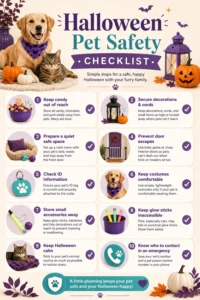
Quick Halloween Pet Safety Checklist
- Put Halloween candy, chocolate, and sugar-free products somewhere your pet cannot reach.
- Secure candles, jack-o’-lanterns, cords, fake cobwebs, and small decorations.
- Prepare a quiet, comfortable room away from the front door.
- Plan how you will prevent door dashing and escapes.
- Check your pet’s ID tag and microchip information.
- Use a costume only if your pet is comfortable wearing one.
- Remove small, dangling, or easily chewed costume accessories.
- Keep glow sticks and other small seasonal items inaccessible.
- Keep the evening calm and predictable rather than forcing your pet to participate.
- Know which veterinarian or emergency service you would contact if an exposure occurs.
1. Keep Halloween Candy Out of Reach
Chocolate
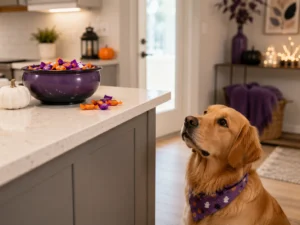
Chocolate can be dangerous to dogs and cats. Dark and baking chocolate are particularly concerning because they contain higher concentrations of the compounds responsible for chocolate toxicity. Keep candy bowls, trick-or-treat bags, and baking ingredients in a closed cabinet or another place your pet cannot access.
Sugar-free candy and xylitol
Some sugar-free candy, gum, mints, baked goods, and other products contain xylitol. The FDA warns that xylitol can be poisonous to dogs. If you think your dog has eaten a product containing xylitol, contact a veterinarian or emergency animal hospital immediately rather than waiting for symptoms.
Wrappers and snack bags
Do not leave wrappers or food bags where pets can reach them. Swallowed packaging can cause gastrointestinal problems and, in some circumstances, contribute to an obstruction. Put discarded wrappers in a covered or inaccessible trash container.
Important: Do not try to determine whether a particular exposure is safe from a general article. The product, ingredients, amount, species, and individual animal all matter.
2. Secure Halloween Decorations Before Your Pet Can Investigate Them
Candles and jack-o’-lanterns
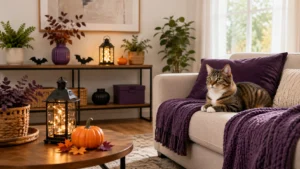
Lit pumpkins and candles can be knocked over and create burn or fire hazards. Curious cats may also get close enough to a flame to be burned. Place open flames where pets cannot reach them or use battery-powered alternatives.
Electrical cords
Keep decorative lights and electrical cords out of paw and chewing range. A curious pet can turn an attractive decoration into a household electrical hazard.
Fake cobwebs and string-like decorations
Fake cobwebs, string-like decorations, and other loose materials can be tempting to chew or pull. They can also become an entanglement or ingestion concern. Keep them out of reach rather than assuming a pet will ignore them.
Small decorations
Small seasonal items, plastic pieces, toys, and accessories may be chewed or swallowed. Before putting a decoration within your pet’s reach, ask whether it could be knocked over, pulled down, chewed, or ingested.
3. Create a Quiet Safe Space Away From Trick-or-Treaters
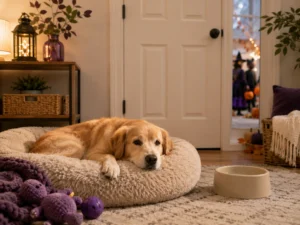
Repeated doorbells, visitors, children, unfamiliar costumes, and extra household activity can be stressful for pets. The ASPCA recommends keeping all but the most social dogs and cats in a separate, comfortable room away from the front door during peak trick-or-treating hours.
Prepare the room before the first visitors arrive. Use familiar bedding, water, and appropriate toys or enrichment. The goal is not to punish your pet for avoiding the party; it is to give them a predictable place where they can feel secure.
4. Prevent Door-Dashing and Escapes
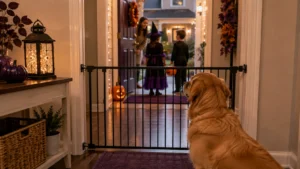
Halloween creates more opportunities than usual for a pet to slip through an open door. Decide in advance how the entrance will be managed. A closed interior door, secure room, or another reliable separation can create a physical barrier between your pet and the busy entrance.
If your pet goes outside after dark, use appropriate identification and a secure leash. Before Halloween, confirm that your pet’s ID information is current.
5. Check Your Pet’s Identification Before Halloween
Take a minute before Halloween to check the information on your pet’s ID tag. If your pet is microchipped, make sure the registration information is current. Halloween brings unusual activity and more opportunities for accidental escapes, so this is an easy precaution worth taking.
6. Decide Whether a Costume Is Right for Your Pet
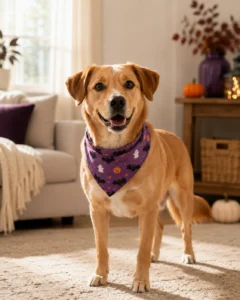
A costume is optional. The ASPCA recommends dressing a dog or cat only if you know the pet is comfortable with it. The costume should not restrict movement, sight, hearing, breathing, barking, or meowing.
Before Halloween night
If you plan to use a costume, introduce it before the event rather than putting it on for the first time when visitors arrive. Our guide to the best dog Halloween costumes can help you find a comfortable option based on your dog’s size, personality, and needs. Check for small, dangling, or easily chewed-off pieces and make sure the fit is appropriate.
Know when to skip it
If your pet appears distressed or uncomfortable, remove the costume. A simple festive bandana—or no costume at all—is a perfectly good way to celebrate. ASPCA also recommends avoiding costumes with headpieces.
Never leave a costumed pet unattended
A costume can catch on objects or create a problem if a pet chews at it. Supervise your pet while a costume is being worn.
7. Keep Human Costume Accessories and Small Items Away From Pets
Small costume pieces, toys, craft materials, jewelry-like accessories, and other loose objects can become choking or ingestion hazards. Put them away when they are not being used, particularly if your dog or cat likes to investigate or chew small objects.
8. Keep Glow Sticks and Similar Seasonal Items Inaccessible
Glow sticks can be especially tempting to cats. ASPCA notes that pets may bite or puncture them. Keep glow sticks and other small seasonal accessories where pets cannot reach them. If your pet bites or punctures one and you are concerned about an exposure, contact your veterinarian for advice.
9. Keep Halloween Night Calm and Predictable
Your pet does not need to participate in every Halloween activity. For a nervous dog or cat, the best plan may be a quiet room, familiar routine, and distance from visitors.
Do not force your pet to greet strangers, wear a costume, or remain in a busy area. If your pet has a history of significant fear or anxiety around visitors, discuss the situation with your veterinarian before Halloween rather than trying a new medical or calming approach for the first time on the holiday.
If fireworks or other loud celebrations are part of your local Halloween festivities, include those sounds in your planning and keep your pet in a secure indoor area.
10. Know What to Do if Your Pet Eats Something Potentially Harmful
If you think your pet has eaten chocolate, a product containing xylitol, a large amount of candy, a decoration, or another potentially harmful substance, contact your veterinarian, an emergency veterinary clinic, or an appropriate animal poison-control service promptly.
Keep the product packaging or ingredient label available if possible. Tell the veterinary professional what was eaten, approximately how much, when it happened, and your pet’s species and relevant information. Do not induce vomiting or give a home treatment unless a veterinary professional specifically tells you to do so.
A 5-Minute Halloween Safety Check Before Trick-or-Treaters Arrive
- Candy and human treats are secured in a closed or inaccessible place.
- Wrappers and snack bags are in a covered or inaccessible trash container.
- Candles and jack-o’-lanterns are inaccessible or replaced with safer alternatives.
- Electrical cords are secured and out of reach.
- Fake cobwebs, string-like decorations, and small decorations are inaccessible.
- Your pet’s quiet room is ready with familiar essentials.
- The front door can be opened without your pet reaching the exit.
- ID tags and microchip information are current.
- Any costume has been checked for fit and small parts—or you have decided not to use one.
- Glow sticks and small accessories are stored away.
- You know which veterinary service you would contact if an exposure occurs.
What About Halloween Treats Made for Pets?
If you want your dog or cat to have a Halloween-themed treat, choose something specifically intended for that species and follow the product’s feeding directions. Avoid treating human candy as a pet treat. If your pet has a medical condition or a restricted diet, ask your veterinarian before introducing new treats.
Frequently Asked Questions
Is Halloween candy dangerous for dogs and cats?
Yes. Chocolate can be dangerous to dogs and cats, and sugar-free products containing xylitol are especially dangerous for dogs. Keep candy, baking ingredients, wrappers, and snack bags inaccessible.
Should I keep my pet away from trick-or-treaters?
For many pets, yes. ASPCA recommends a separate, comfortable room away from the front door for all but the most social dogs and cats during peak trick-or-treating hours.
Are Halloween decorations safe for pets?
Some are, but not all. Lit candles, electrical cords, fake cobwebs, string-like decorations, and small chewable or swallowable items can create hazards. Choose safer alternatives and keep risky decorations out of reach.
Is it safe to put a Halloween costume on my pet?
Only if your pet is comfortable wearing it. The costume should not restrict movement, sight, hearing, breathing, barking, or meowing, and it should not contain small or dangling pieces that can be chewed off.
What should I do if my dog eats something containing xylitol?
Contact your veterinarian, an emergency animal hospital, or an appropriate animal poison-control service immediately. FDA guidance emphasizes prompt veterinary care after suspected xylitol ingestion.
Can my pet stay near the front door during Halloween?
Some pets may cope well, but repeated visitors and unfamiliar costumes can increase stress and escape risk. A secure, comfortable room away from the front door is a safer option for many dogs and cats.
Are glow sticks safe for pets?
Keep them inaccessible. ASPCA notes that pets, especially cats, may bite or puncture glow sticks. Contact your veterinarian if you are concerned about an exposure.
What should I do if my pet eats a Halloween decoration?
Contact your veterinarian for advice, especially if the item was string-like, sharp, large, or potentially toxic. Do not rely on a general article to determine whether an individual ingestion is safe.
When to Contact a Veterinarian
Seek veterinary guidance promptly if your pet may have ingested chocolate, xylitol, a potentially harmful decoration, or another toxic substance; if you are concerned about a possible foreign-body ingestion; or if your pet develops concerning signs after an exposure. This guide provides general preparation advice and cannot determine whether an individual exposure is safe.
Sources & Veterinary Nutrition/Safety References
ASPCA — Halloween Safety Tips
Direct source: https://www.aspca.org/pet-care/general-pet-care/halloween-safety-tips
Used to support: Halloween-specific guidance on candy, visitors, decorations, costumes, and keeping pets separated from peak trick-or-treating activity.
ASPCA — Don’t Let Your Pets Get Tricked by These Halloween Treats!
Direct source: https://www.aspca.org/news/dont-let-your-pets-get-tricked-these-halloween-treats
Used to support Halloween guidance on costumes, candy, pet identification, and first-Halloween preparation.
ASPCA—Tips on Costumes, Candy and Celebrating Safely With Your Pets this Halloween
Direct source: https://www.aspca.org/news/tips-costumes-candy-and-celebrating-safely-your-pets-halloween
Used to support: Additional guidance on costume fit, small costume parts, identification, candy, glow sticks, and pet stress.
FDA—Paws Off Xylitol; It’s Dangerous for Dogs
Direct source: https://www.fda.gov/consumers/consumer-updates/paws-xylitol-its-dangerous-dogs
Used to support: Current FDA information on xylitol and prompt veterinary care after suspected ingestion.
FDA — Keep Your Dogs and Cats Safe From Holiday Hazards
Direct source: https://www.fda.gov/consumers/consumer-updates/keep-your-dogs-and-cats-safe-holiday-hazards
Used to support: Current FDA guidance on xylitol, chocolate, alcohol, and food-bag hazards.
VCA Animal Hospitals — Halloween Safety Tips for Pets
Direct source: https://vcahospitals.com/resources/lifestyle-cat/hazards-safety/halloween-safety-tips
Used to support veterinary guidance on decorations, cobwebs, secure areas, candy, and Halloween activity.
Niche Life Success — 50 Halloween Blog Post Ideas for Pet Bloggers
Direct source: https://www.nichelifesuccess.com/50-halloween-blog-post-ideas-for-pet-bloggers/

4 Comments
Comments are closed.