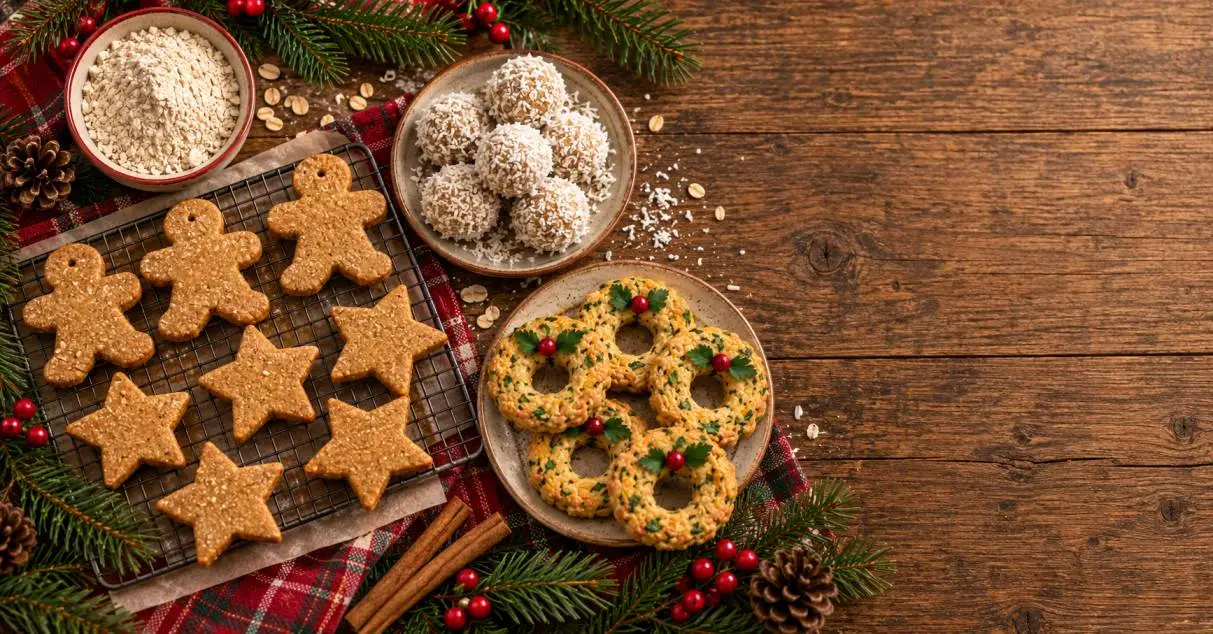
5 Easy Christmas Dog Cookie Recipes (3 Ingredients or Fewer)
5 Easy Christmas Dog Cookie Recipes (3 Ingredients or Fewer)
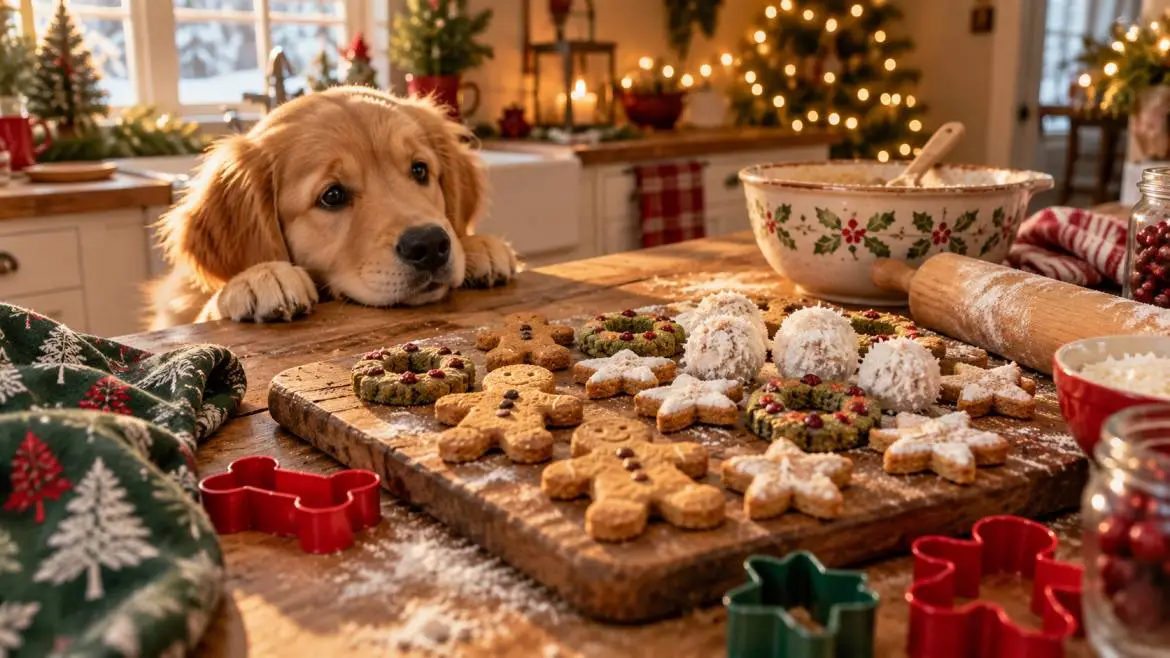
Simple, vet-informed dog treat recipes you can bake tonight—no fancy equipment, no complicated ingredient lists.
The first Christmas with a new dog, I made the classic beginner mistake: I grabbed a jar of peanut butter off the pantry shelf without checking the label. Turns out it had xylitol in it, a sugar substitute that’s genuinely dangerous for dogs, and I came within one Google search of a very bad holiday. That moment taught me more about baking for dogs than any recipe ever has: it’s not about fancy ingredients; it’s about knowing exactly what’s going into the bowl.
These five recipes are built around that lesson. Everyone uses three ingredients or fewer, nothing exotic, and nothing your dog’s stomach will regret. Whether you’re baking your first batch ever or just want a quick Christmas project to do with the kids (and the dog supervising from the kitchen floor), this is a good place to start.
Quick takeaways
- All five recipes use 3 ingredients or fewer, mostly things you already have (oat flour, peanut butter, pumpkin, banana, and applesauce).
- Always check peanut butter labels for xylitol before baking; it’s toxic to dogs even in small amounts.
- Homemade treats aren’t the same as a homemade diet; they’re fine in moderation but shouldn’t replace balanced dog food.
- No fancy equipment needed: a bowl, a baking sheet, and a cookie cutter (or just a fork) will get you through every recipe here.
- Most of these keep for about a week at room temperature or months in the freezer.
Quick Safety Basics Before You Start Baking
This is the part that actually matters more than the recipes themselves. A few ingredients that show up constantly in human baking are genuinely dangerous for dogs, and it’s worth knowing them before you’re standing at the counter with a mixing bowl:
Never use these in dog treats
- Xylitol—a sugar substitute found in some peanut butters, sugar-free baked goods, and gum. According to the American Kennel Club, it’s highly toxic to dogs even in tiny amounts and has increasingly turned up in specialty peanut butter brands. Always read the label on any peanut butter before baking with it.
- Chocolate and cocoa powder—toxic to dogs, no exceptions, including “just a little.”
- Raisins, currants, and grapes—linked to kidney damage in dogs, even in small quantities.
- Onion and garlic (including powders)—can damage red blood cells over time.
- Macadamia nuts—toxic to dogs in fairly small amounts.
This is a short list of the ingredients most likely to sneak into baking. For the fuller picture, the ASPCA’s list of people’s foods to avoid feeding pets is worth bookmarking.
One more thing worth knowing: vets aren’t generally worried about the occasional homemade treat—they’re worried about homemade diets replacing a dog’s complete, balanced food without professional guidance. A treat is not a meal. VCA Animal Hospitals recommends that treats of any kind, store-bought or homemade, make up no more than about 10% of a dog’s daily calories, with the rest coming from a nutritionally complete dog food. This concern is well documented: an American Animal Hospital Association review of homemade dog food recipes found that the large majority were missing at least one essential nutrient. These recipes are treats, not dinner.
Tools You’ll Need
This section contains an Amazon affiliate link—see our affiliate disclaimer for details.
- Mixing bowl and measuring cups/spoons
- Baking sheet lined with parchment paper
- Rolling pin (or a clean glass bottle works fine)
- Cookie cutters—gingerbread man, star, Christmas tree, and a small round cutter cover every recipe below. The Ann Clark Christmas Cookie Cutter Set is Amazon’s Choice and happens to include every shape used in this post.
- Wire cooling rack
- Airtight container for storage
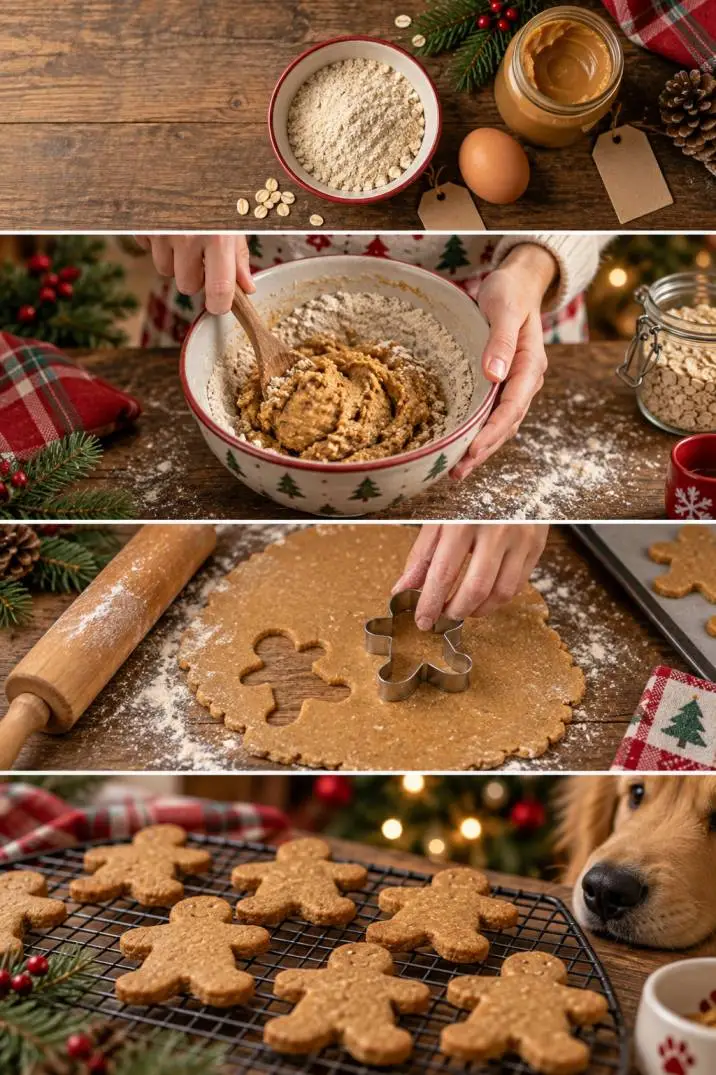
1. Peanut Butter Gingerbread Dog Cookies
Ingredients
- 1 cup oat flour
- 1/2 cup unsweetened, xylitol-free peanut butter
- 1 large egg
Instructions
- Preheat oven to 350°F (175°C) and line a baking sheet with parchment paper.
- Mix the peanut butter and egg in a bowl until smooth, then stir in the oat flour until a soft dough forms.
- Roll the dough to about 1/4-inch thickness on a lightly floured surface.
- Cut out shapes with a gingerbread-man cutter and place on the baking sheet.
- Bake for 12–15 minutes, until firm and lightly golden.
- Cool completely on a wire rack before serving.
2. Pumpkin Cinnamon Star Cookies
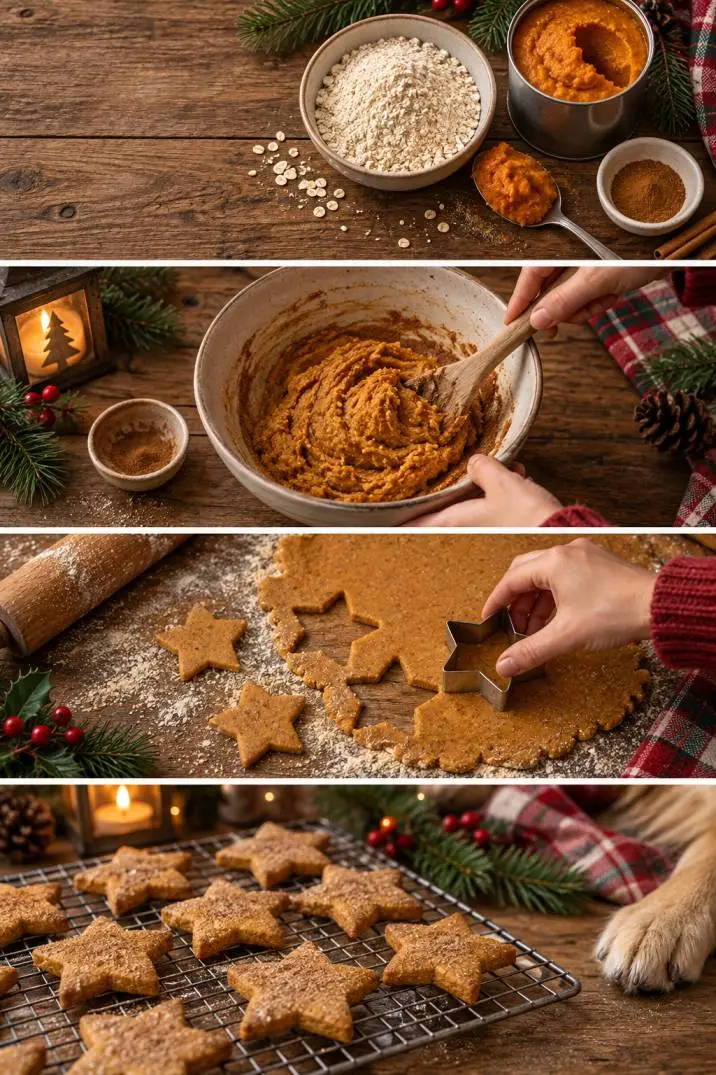
Ingredients
- 1 cup oat flour
- 1/2 cup plain canned pumpkin puree (not pie filling)
- 1/4 teaspoon ground cinnamon
Instructions
- Preheat oven to 350°F (175°C) and line a baking sheet with parchment paper.
- Mix the pumpkin puree and cinnamon in a bowl, then stir in the oat flour until a dough comes together.
- Roll to 1/4-inch thickness and cut out shapes with a star-shaped cutter.
- Arrange on the baking sheet and bake for 15–18 minutes until firm.
- Let cool completely before storing or serving.
3. No-Bake Banana Coconut Snowballs
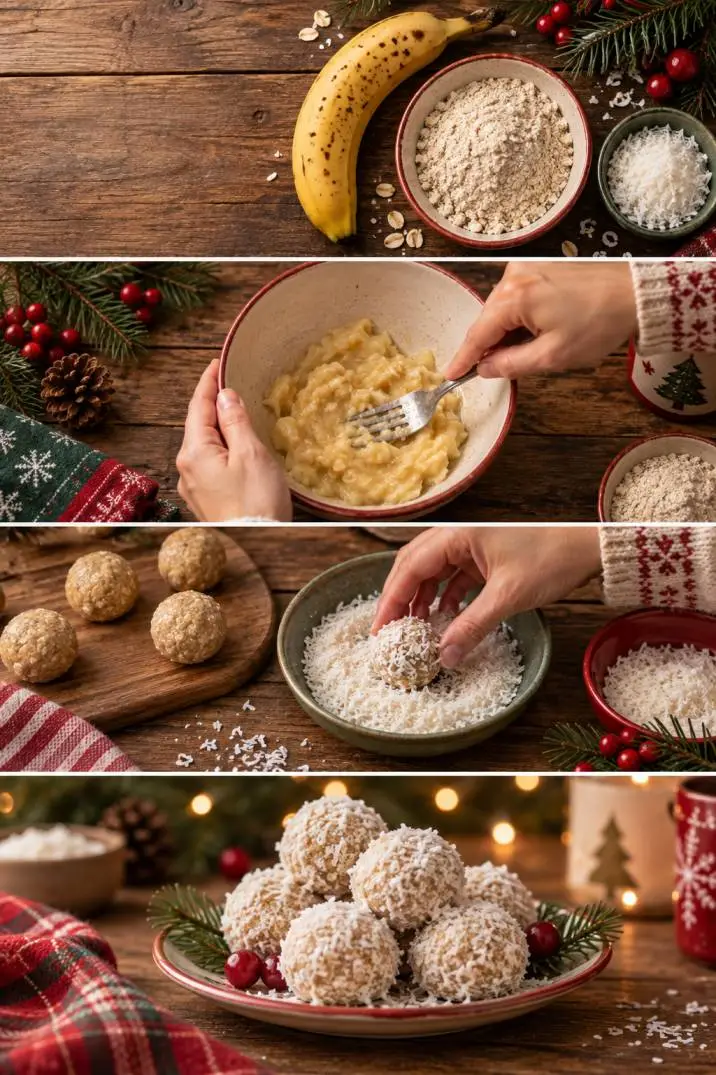
Ingredients
- 1 ripe banana, mashed
- 1 cup oat flour
- 2 tablespoons unsweetened shredded coconut, for rolling
Instructions
- Mash the banana in a bowl until smooth.
- Mix in the oat flour until a thick, moldable dough forms.
- Roll into small balls, about 1 inch across.
- Roll each ball in the shredded coconut to coat.
- Refrigerate for at least 30 minutes to firm up before serving.
No oven required—this is the easiest one on the list if you’re baking with kids or short on time.
4. Apple Cinnamon Christmas Tree Cookies
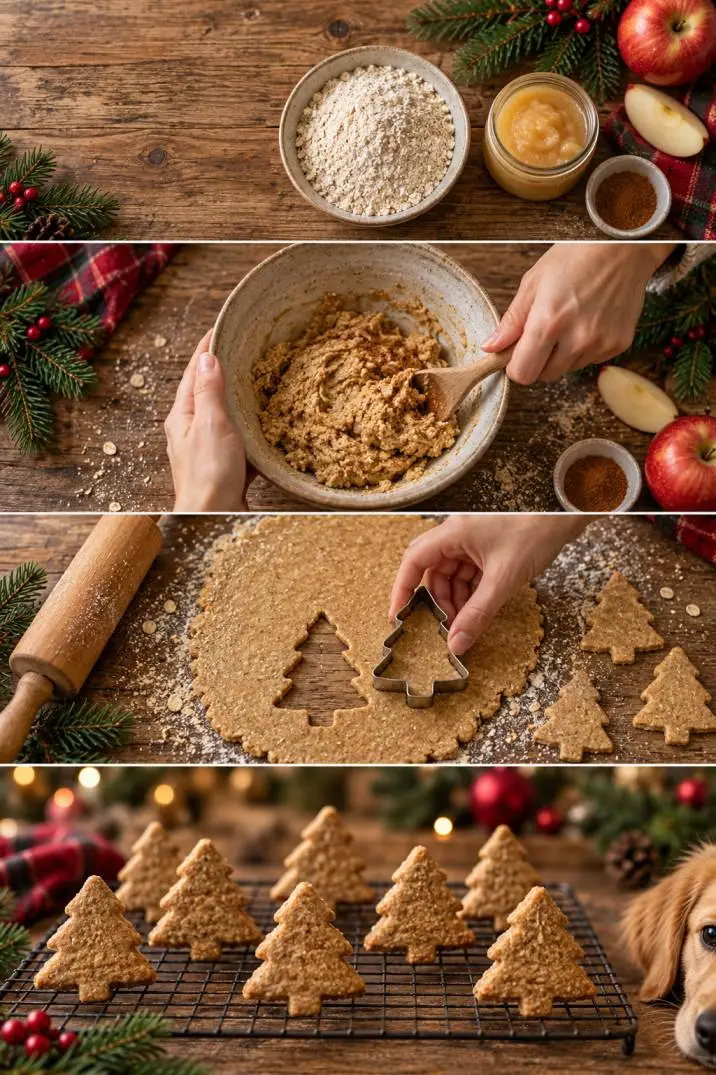
Ingredients
- 1 cup oat flour
- 1/2 cup unsweetened applesauce (no added sugar or xylitol)
- 1/4 teaspoon ground cinnamon
Instructions
- Preheat oven to 350°F (175°C) and line a baking sheet with parchment paper.
- Combine the applesauce and cinnamon, then mix in the oat flour until a dough forms.
- Roll to 1/4-inch thickness and cut out shapes with a Christmas tree-shaped cutter.
- Place on the baking sheet and bake for 15–18 minutes until the edges are firm.
- Cool completely before serving.
5. Cheesy Parsley Wreath Cookies (Savory)
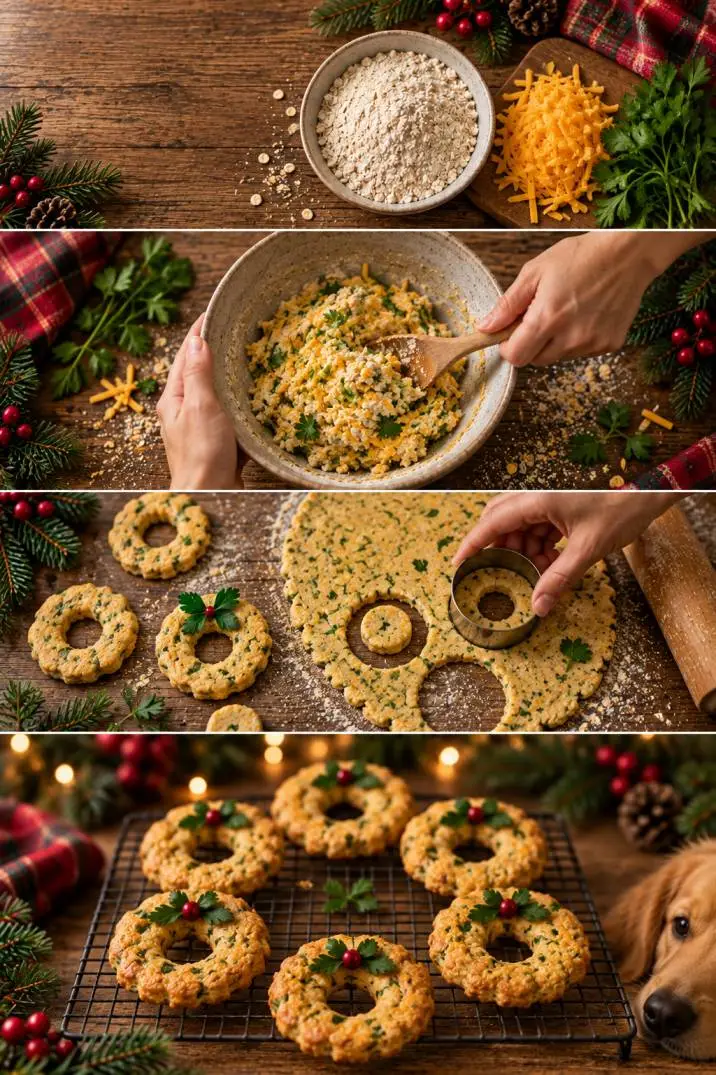
Ingredients
- 1 cup oat flour
- 1/2 cup shredded mild cheddar cheese
- 1 tablespoon finely chopped fresh parsley
Instructions
- Preheat oven to 350°F (175°C) and line a baking sheet with parchment paper.
- Mix the cheese and parsley together, then work in the oat flour—adding a splash of water if needed—until a dough forms.
- Roll to 1/4-inch thickness and cut into rounds, using a smaller cutter to remove the center for a wreath shape if you have one.
- Bake for 12–15 minutes, until firm and lightly golden.
- Cool completely before serving.
Not every dog is obsessed with peanut butter and pumpkin. This one’s for the dogs who’d pick savory over sweet every time.
Storage: How Long Do Homemade Dog Cookies Last?
None of these recipes use preservatives, so they won’t last as long as store-bought treats. As a general guide: about a week in an airtight container at room temperature, up to two to three weeks in the fridge, and a few months in the freezer if you want to bake a big batch ahead of the holidays. If a treat ever smells off or looks moldy, it’s not worth the risk—toss it.
Frequently Asked Questions
What kind of cookies can dogs eat?
Plain, homemade cookies made with dog-safe ingredients like oat flour, plain canned pumpkin, xylitol-free peanut butter, banana, or applesauce. Avoid anything with chocolate, xylitol, raisins, or heavy added sugar and salt—even in cookies marketed as “plain.”
What’s the easiest dog treat recipe if I only have 5 minutes?
The no-bake banana coconut snowballs above. No oven involved—mash a banana, mix in oat flour, roll into balls, and coat in unsweetened shredded coconut. About ten minutes of hands-on time, then a quick chill in the fridge.
What are the best ingredients to build a dog treat around?
Keep it to one whole-food base ingredient—plain pumpkin, banana, or xylitol-free peanut butter—plus a simple binder like oat flour. Skip added sugar, salt, and artificial sweeteners entirely.
What should you never put in homemade dog treats?
Xylitol, chocolate or cocoa powder, raisins, currants, grapes, onion, garlic, and macadamia nuts. Xylitol is the one most likely to sneak in unnoticed, since it hides in some peanut butter brands—see the safety section above for the full list.
Is there a “silent killer” ingredient hiding in common dog treats?
Xylitol is the closest thing to it. It’s safe for people but highly toxic to dogs even in small amounts, and it shows up in some peanut butter brands without much warning on the front label. Always check the ingredient list before baking.
Why do some vets caution against homemade dog food?
The concern is about complete diets, not occasional treats. Homemade meals that replace a dog’s full diet often miss essential nutrients unless formulated with a veterinary nutritionist. A treat made a few times a month isn’t the same risk category.
What is the healthiest treat to give a dog?
Something low in calories with a short, simple ingredient list, fed in moderation. Plain fruits and vegetables like pumpkin or banana are a safe bet, and the American Kennel Club has a helpful breakdown of how to size treats to your dog’s daily calorie needs.
What do vets recommend when it comes to dog treats?
Keep treats to no more than about 10% of a dog’s daily calories, introduce any new treat gradually to watch for stomach upset, and choose simple, low-calorie options over anything heavily processed.
The Bottom Line
You don’t need a culinary degree or a pantry full of specialty ingredients to bake something your dog will genuinely love this Christmas. Three ingredients, a cookie cutter, and twenty minutes are really all it takes. The label-reading habit is the part that sticks with you long after the holidays are over—once you start checking for xylitol out of instinct, you’ll never bake for your dog without doing it again.