Do Cats Need Sweaters? When a Cat Sweater Helps, When It Doesn’t, and How to Pick One
Do Cats Need Sweaters? When a Cat Sweater Helps, When It Doesn’t, and How to Pick One
Disclosure: this post contains Amazon affiliate links. If you buy through them, I may earn a small commission at no extra cost to you. Everything here is general information, not a substitute for advice from your own vet.
Every autumn my feed fills up with cats in tiny knitwear. Pumpkin turtlenecks, reindeer hoodies, and one very unimpressed tabby in a pink cardigan. It’s adorable. It also raises a fair question: does your cat actually need a sweater, or are we dressing them for our own entertainment?
After going through what veterinary sources say, here’s where I’ve landed. Most cats don’t need a cat sweater. A smaller group really does, and for those cats the right one makes winter noticeably more comfortable. This guide will help you work out which group yours belongs to, what to buy if it’s the second, and how to avoid the mistakes that turn a cozy layer into a stressful one. If you live with a Sphynx, there’s a whole section just for you further down.
Key takeaways
- Healthy cats with a full coat, living in a heated home, almost never need a sweater.
- Hairless cats (Sphynx, Peterbald), some senior cats, and cats recently shaved for surgery or grooming are the main candidates.
- A badly fitted or too-thick sweater can cause overheating, stress, and restricted movement, so skip it if your cat panics.
- Choose soft, stretchy, washable fabric with no dangly bits, and measure before you buy.
- Sphynx owners: look for washable cotton or fleece, own at least two, and check the skin under the sweater every time you swap.
- Warm beds, blankets, and draught-proofing often work better than clothes.
The honest answer: most cats are already wearing a winter coat.
A cat’s fur is built-in insulation. For a healthy, fully coated cat who lives indoors, that’s usually enough. Dr. Susan Sikule of Just Cats Veterinary Clinic in New York told PetMD that the answer to “Does my cat need a sweater?” is almost always no.
There’s a flip side too. A thick sweater layered over an already plush coat can make a cat too warm, and a cat who can’t cool down is a miserable cat. The ASPCA’s simple rule of thumb, from its cold weather safety tips, is a good one: if it’s too cold for you, it’s probably too cold for your pet, so keep them inside. The better fix for a chilly house is usually the house, not a wardrobe.
Which cats actually benefit from a sweater?
Hairless cats
This is the clearest case. Sphynx and other hairless breeds have only a fine layer of peach-fuzz, so they lose heat faster than furry cats. International Cat Care notes that hairless cats are susceptible to cold and to sunburn if they go outside. Their skin also builds up oil quickly, which matters when you’re choosing clothes (more on that in a moment).
To keep it balanced: some vets say even Sphynx cats may only need a sweater in a genuinely cold environment, and tolerance varies a lot. Some hairless cats happily wear one, while others refuse. PetMD’s guide to keeping hairless cats warm lists clothing and blankets as the two main options, so if clothes aren’t your cat’s thing, blankets and warm beds are a perfectly good plan B. I’ve given Sphynx cats their own section below, with sweater picks.
Senior cats
As cats age, they feel the cold more, and they’re more prone to arthritis. The Cornell Feline Health Center advises owners of older cats to “think warm,” with a caution that too much heat can burn a cat who can’t move away quickly. Warm, not hot. The same Cornell article reminds us not to write off gradual changes in behavior as “just old age,” so if your senior suddenly seems to be hunting for heat or hiding more, mention it at the next vet visit.
Cats recovering from surgery or a big grooming session
Some vets recommend a sweater or even a T-shirt for cats who’ve been shaved for surgery, and Dr. Sikule sometimes sends older cats home in a sweater after a grooming session that removed a lot of coat. If your vet suggests this, follow their instructions on what to use and for how long.
When a sweater is a bad idea
Skip it, or at least pause, if any of these apply:
- Your cat has a thick coat and a warm home. You’re adding heat they don’t need.
- Your cat freezes, flattens their ears, hides, or tries to bite the fabric off. That’s a clear “no thanks.” Stress isn’t worth a cute photo.
- The fit restricts movement. A sweater that’s tight in the armpits or chest can interfere with walking and grooming.
- You’re planning a walk in awful weather. PetMD’s advice is blunt and sensible: on a cold, rainy day, keep the cat in rather than bundling them up for a leash walk.
How cold is too cold for a cat?
I’d love to hand you a magic number, but I haven’t found a single vet-endorsed one that fits every cat. Age, body condition, coat, and health all change the answer. What I can tell you:
- Cats should stay indoors when it’s cold. Outdoor cats can get frostbite without shelter, and the ASPCA warns that cats sometimes crawl into warm car engines, so bang on the hood before you start the car.
- Watch your cat’s behavior. Shivering, curling into a tight ball, burrowing under every blanket, or parking permanently on a heater all suggest they’re chilly.
- For hairless and elderly cats, aim for a comfortably warm home with warm places to nap, not just the minimum you’d tolerate yourself.
How to choose a cat sweater that works
Fabric
Go for soft, stretchy, and breathable. A thin cotton layer suits a mild chill, and fleece or soft knit adds more warmth. Some animals find wool itchy, so if you pick wool, watch for scratching. Avoid buttons, bells, dangling strings, and loose threads, which cats can chew or catch a claw on.
Fit
Measure three things with soft tape: around the neck, around the widest part of the chest just behind the front legs, and from the base of the neck to the base of the tail. Then compare with the size chart, since pet sizing is wildly inconsistent between brands. Once it’s on, you should be able to slide two fingers under the neck and chest, your cat should walk normally, and the back end should be clear so they can use the litter box without a mess.
Easy on, easy off
Stretchy necks and simple shapes are less scary than complicated harness-style outfits. Cats who hate things going over their heads often cope better with a wide, forgiving neck opening.
Washability
This one is especially important for hairless cats. PetMD’s guide notes that clothes need to be changed and washed regularly because dirty fabric can irritate sensitive skin. Buy at least two so one is always clean, and check the skin underneath for redness every time you swap. Two-packs make that easy, and a few of the picks further down come that way.
How to introduce a sweater (and how long it can stay on)
Let your cat sniff it first, then rest it on their back with a treat. Slip it on for a minute or two, reward, and take it off before they get fussy. Build up gradually over several days. There’s no official time limit I could find, so go by your cat: remove it if they’re panting, restless, or trying to wriggle out. I wouldn’t leave a brand-new sweater on an unsupervised cat until I’ve watched them walk, jump, and groom in it.
Sphynx cats: a sweater guide just for hairless cats
If you share your home with a Sphynx, forget what I said about fur being built-in insulation. Your cat doesn’t have much. That peach-fuzz coat means heat escapes quickly, and it’s why a sweater goes from “cute extra” to “genuinely useful tool” for this breed. Of the two options PetMD lists for keeping hairless cats warm, clothing is one and blankets are the other, and most Sphynx households end up using both.
What matters most for a Sphynx
Washability comes first. Sphynx skin builds up oil quickly, and PetMD points out that dirty clothes can irritate sensitive skin. So think in rotations: one on the cat, one in the wash, ideally a third as a spare. Every time you swap, run your eyes over the skin underneath for redness.
Pick the fabric to match the room. Cotton is the lighter choice and suits a mild chill, such as a heated home on an autumn evening. Fleece is the one to reach for in a cool or air-conditioned room. Whichever you choose, skip anything scratchy, and skip dangly trims.
Mind the fit around the belly and legs. A Sphynx’s skin is exposed, so a sweater that’s too snug under the arms or chest can rub. Measure the neck, chest, and length before you order, and make sure the back end stays clear for the litter box.
Warm, not hot. Cornell’s reminder about older cats applies here too: if you add heated pads on top of clothing, keep an eye on whether your cat can easily move away from the heat.
And a fair warning: not every Sphynx wants to wear clothes. If yours flattens their ears and freezes, a warm bed and a soft blanket are a perfectly good plan B.
Five Sphynx sweaters worth a look
These all came up in an export of Amazon’s best-selling cat apparel. Prices and ratings are what the export showed, and they change often, so check the listing before you buy. I haven’t tested any of these on a cat, so treat my notes as a guide to what to look for, and read recent reviews from owners of cats with a similar build to yours.
-
JL WarmPaws Sphynx Cat Clothes: best for cool rooms.
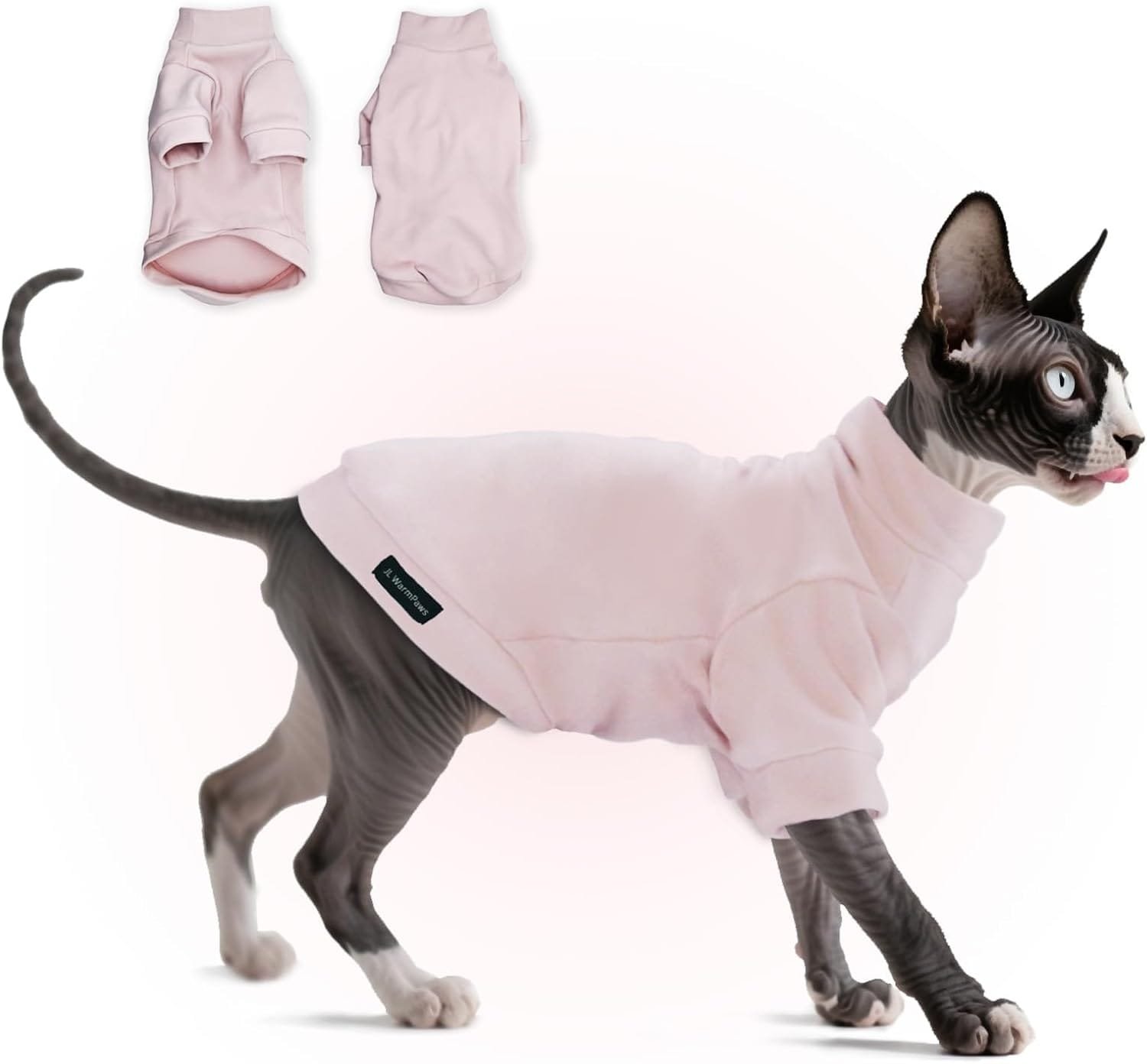
His fleece pullover also carried an Amazon’s Choice badge on the page I checked. The listing describes soft, stretchy fleece that’s long enough to cover the belly and washes well, which is exactly what a hairless cat needs. It was around $12.99, the lowest price of the five, with a 4.4 rating from 171 reviews. Best for: Sphynx and other hairless cats in cool or air-conditioned rooms. Watch for: long sleeves make fit more important, so measure the chest and legs carefully, and buy a spare so you can rotate between washes. Check price and sizes on Amazon.
- Idepet Sphynx Cotton Turtleneck: best for mild chills.
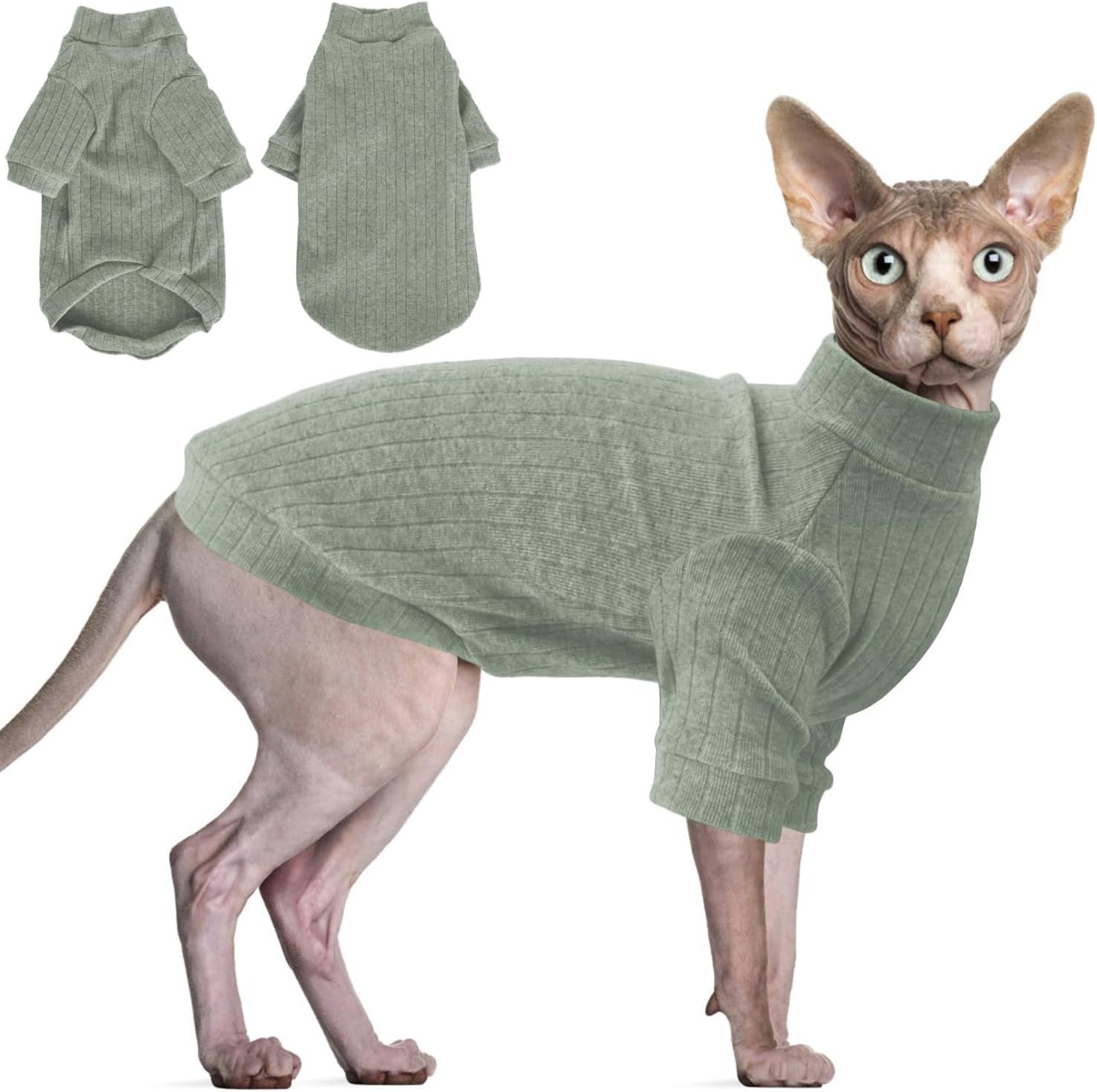 This is the cotton option on my list, and it’s also the most reviewed of the five, with a 4.4 rating from 632 reviews at around $13.99. A big review pool is handy because you can search the reviews for owners describing a cat shaped like yours. Best for: Sphynx cats in a mostly warm home who just need a light layer in the evenings. Watch for: turtlenecks make neck fit important, so check the neck measurement against the size chart, and watch whether your cat tolerates the high collar. Check price and sizes on Amazon.
 - Kitipcoo Grey Coral Fleece Sphynx Sweater: best everyday fleece.
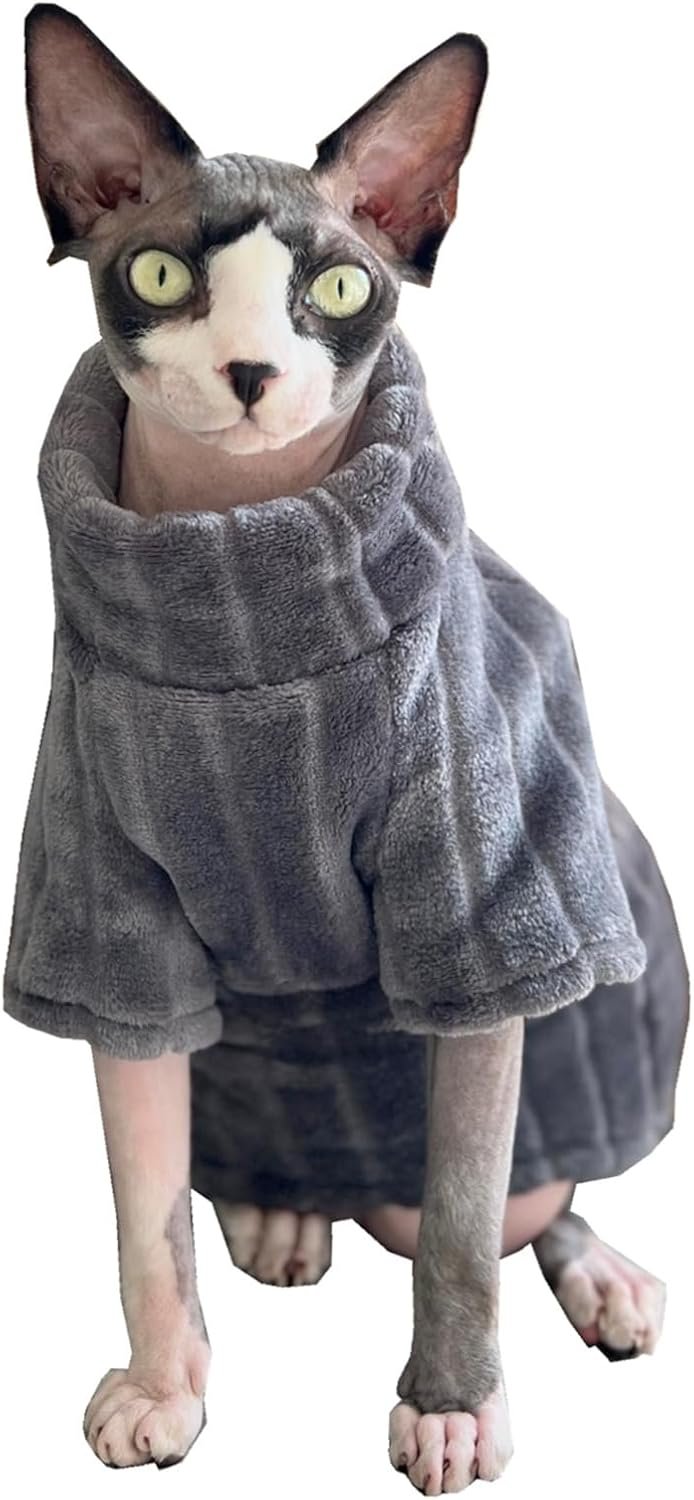 Coral fleece is a soft, warm option and this one holds a 4.5 rating across 212 reviews at around $14.99. Best for: cooler rooms and overnight chills, in a neutral grey that works with most colors of Sphynx skin. Watch for: fleece can collect hair and dust, so wash it regularly. Check price and sizes on Amazon.
 - Kitipcoo Dinosaur Sphynx Sweater: best for personality.
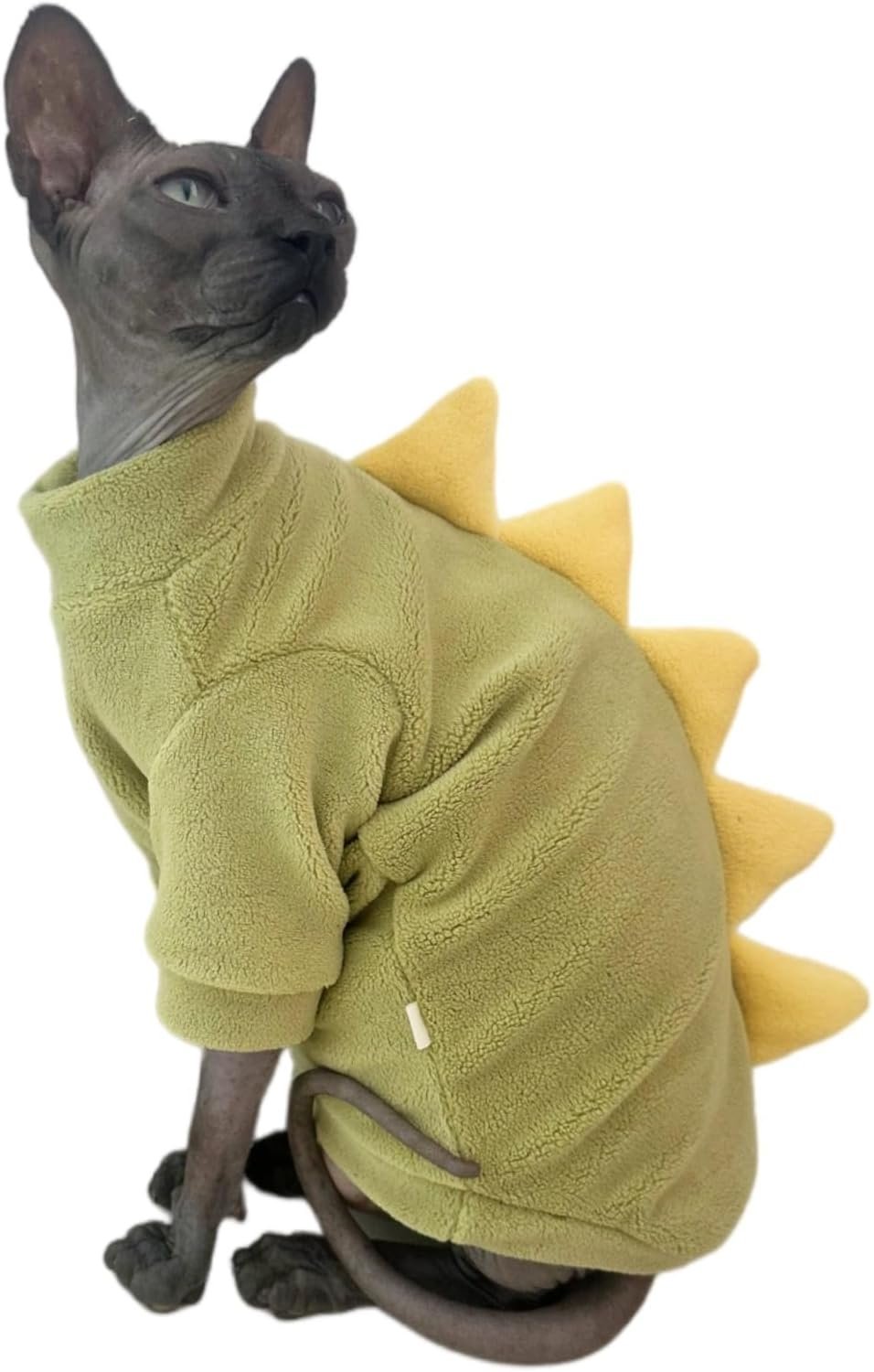 Same brand, same 4.5 rating, with 134 reviews at around $16.99, and a dinosaur design that’s hard not to love. Best for: Sphynx owners who want warmth and a good photo. Watch for: decorative designs sometimes add extra bits to the back, so check the listing photos for anything your cat could chew or snag a claw on. Check price and sizes on Amazon.
 - PUMYPOREITY Sphynx Plush Fleece Sweater: the plush option.
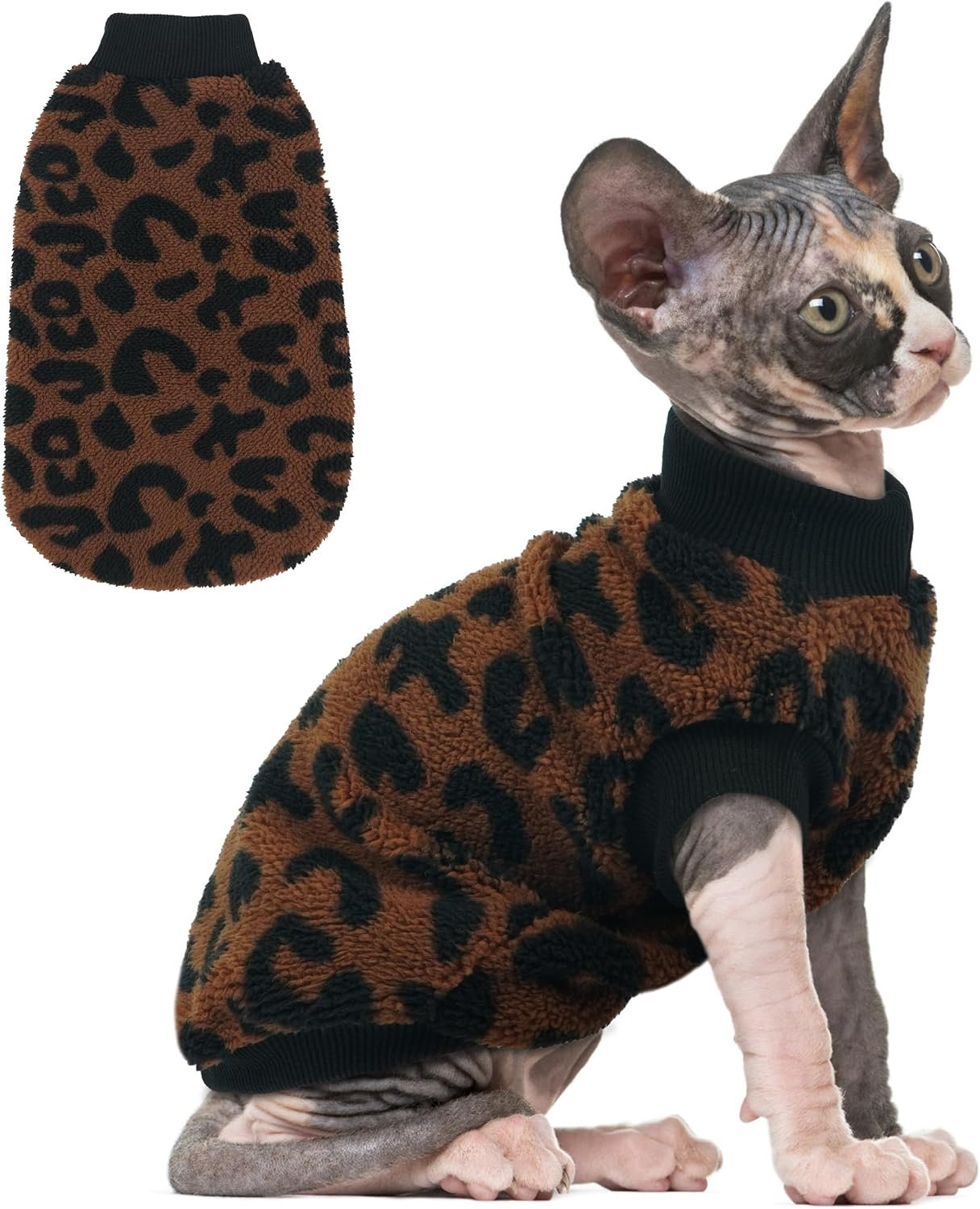 A plush fleece sweater at around $17.27, with a 4.3 rating from 78 reviews. That’s the smallest review pool of the five, so I’d read the recent reviews more carefully before ordering. Best for: very chilly rooms where you want something with a bit more loft. Watch for: plush fabrics are warmer, so keep an eye on whether your cat gets too warm, and be ready to take it off. Check price and sizes on Amazon.
If I were buying for a first-time Sphynx sweater wearer, I’d start with a light cotton layer, see how the cat reacts, and only move up to fleece once I knew they’d tolerate clothes at all.
Other cat sweaters worth a look
Not a Sphynx? These are the picks I’d look at for thin-coated cats, seniors, and cats who feel the cold, plus a few seasonal ones if you’re in it for the photos. I picked the everyday ones based on what Amazon showed in cat sweater searches (Amazon’s Choice or Best Seller badges) and on features that match the advice above, and the seasonal ones from the best-seller export. Badges change by search and by day, so check the listing when you click.
Everyday layers
Jnancun Cat Sweater: the best light knit layer. 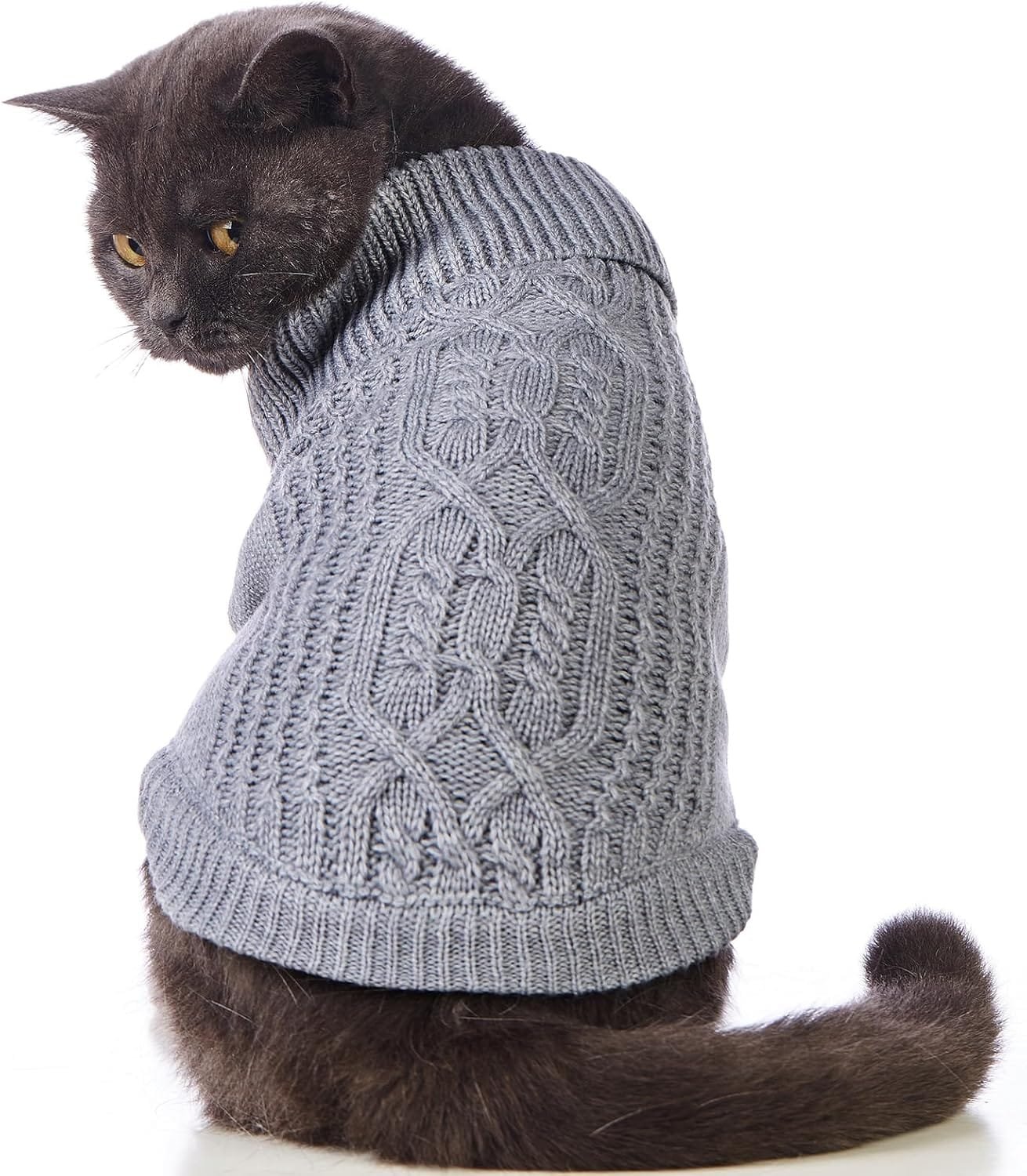 This stretchy knit sweater showed the Amazon’s Choice “Overall Pick” badge in several cat sweater searches. The listing advertises 19 colors and 6 sizes, plus a snug, ready-knit fit in a sleeveless/vest style. Best for: a cat who tolerates a snug layer, such as a thin-coated senior, or a small short-haired cat in a drafty room. Watch for: knits can snag claws, so keep nails trimmed and check for loose threads. Check price and sizes on Amazon.
EXPAWLORER Warm Fleece Checkered Sweater: the proven budget pick.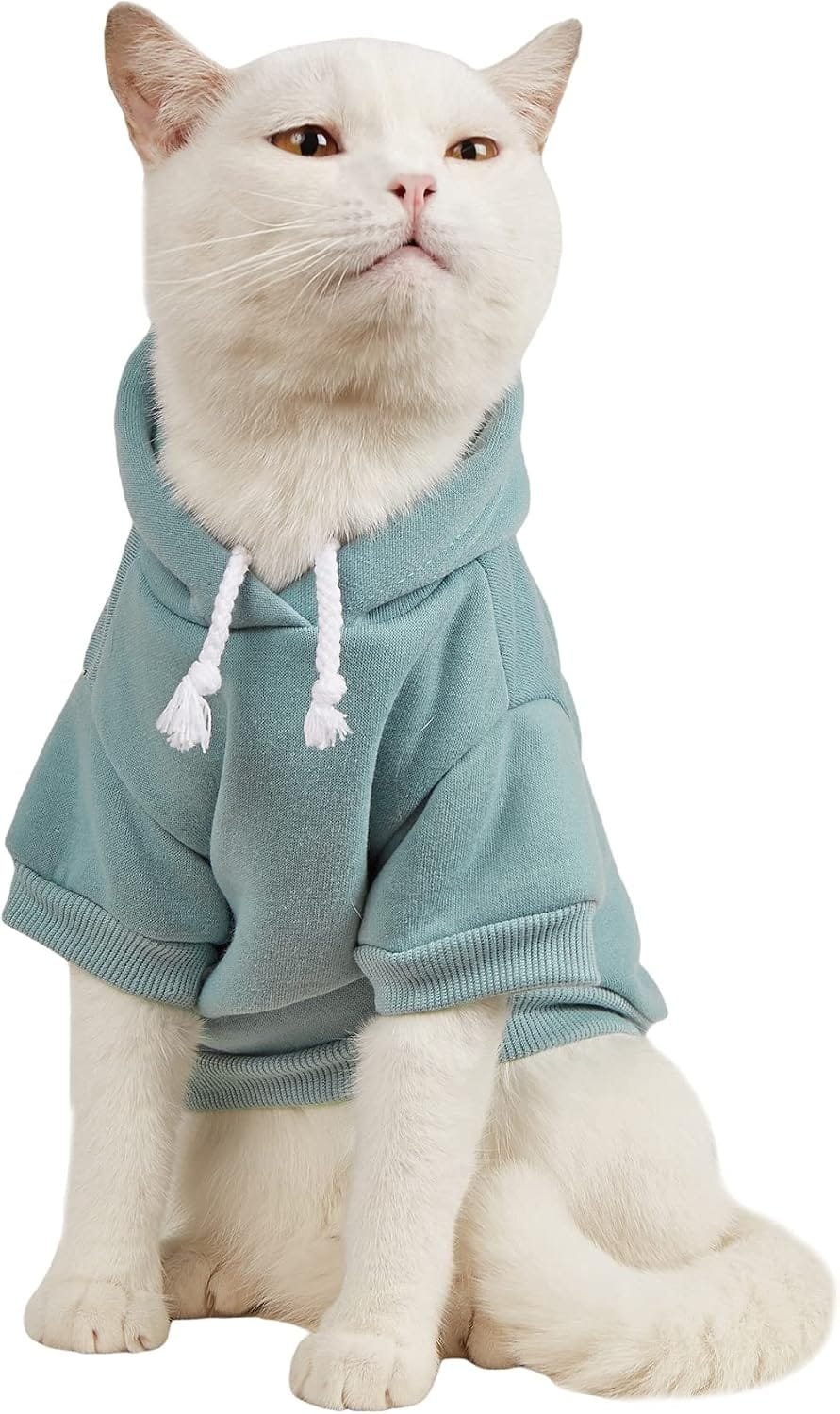
BAOBICUTE 3-Pack Fleece Sweatshirts: best budget rotation.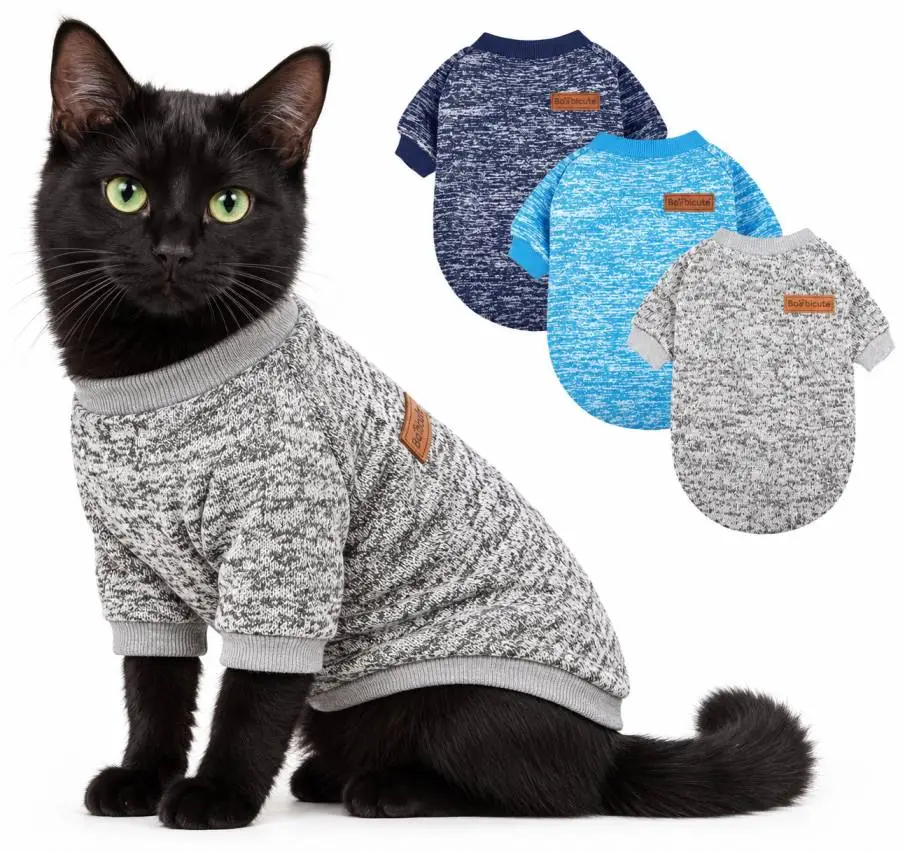 This pack is marked as a best seller in dog sweaters, and the listing says it’s suitable for small dogs and cats. Three in a pack means you can swap a clean one in while another is in the wash. Best for: small cats and anyone who wants spares. Watch for: it’s cut with small dogs in mind, so cat proportions may differ. Compare your cat’s measurements with the size chart before ordering. Check price and sizes on Amazon.
Seasonal and festive
Honestly, a pumpkin sweater is rarely something a cat needs. But if you have a healthy, relaxed cat and want a short photo session, these are the ones that kept turning up in the export. Keep the sessions brief, stop at the first sign of stress, and don’t use them as everyday warmth for a cat that really does need it.
- BWOGUE Pumpkin Turtleneck Sweater, 2-pack:
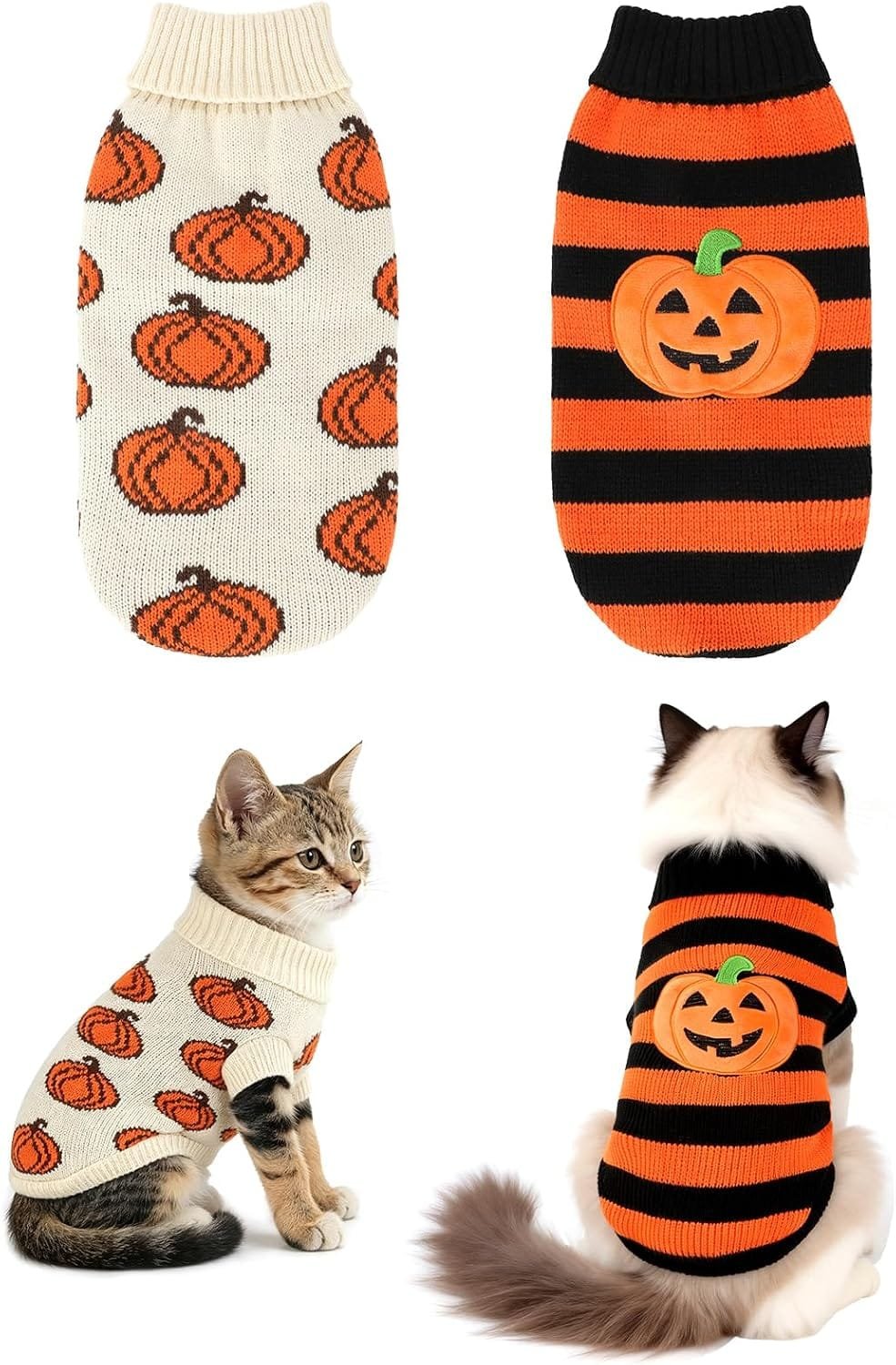 the highest rated of the festive group at 4.6 from 304 reviews, around $16.99, and two in a pack means a spare. Check price on Amazon.
 - Rypet Pumpkin Knit Sweater, 2-pack:
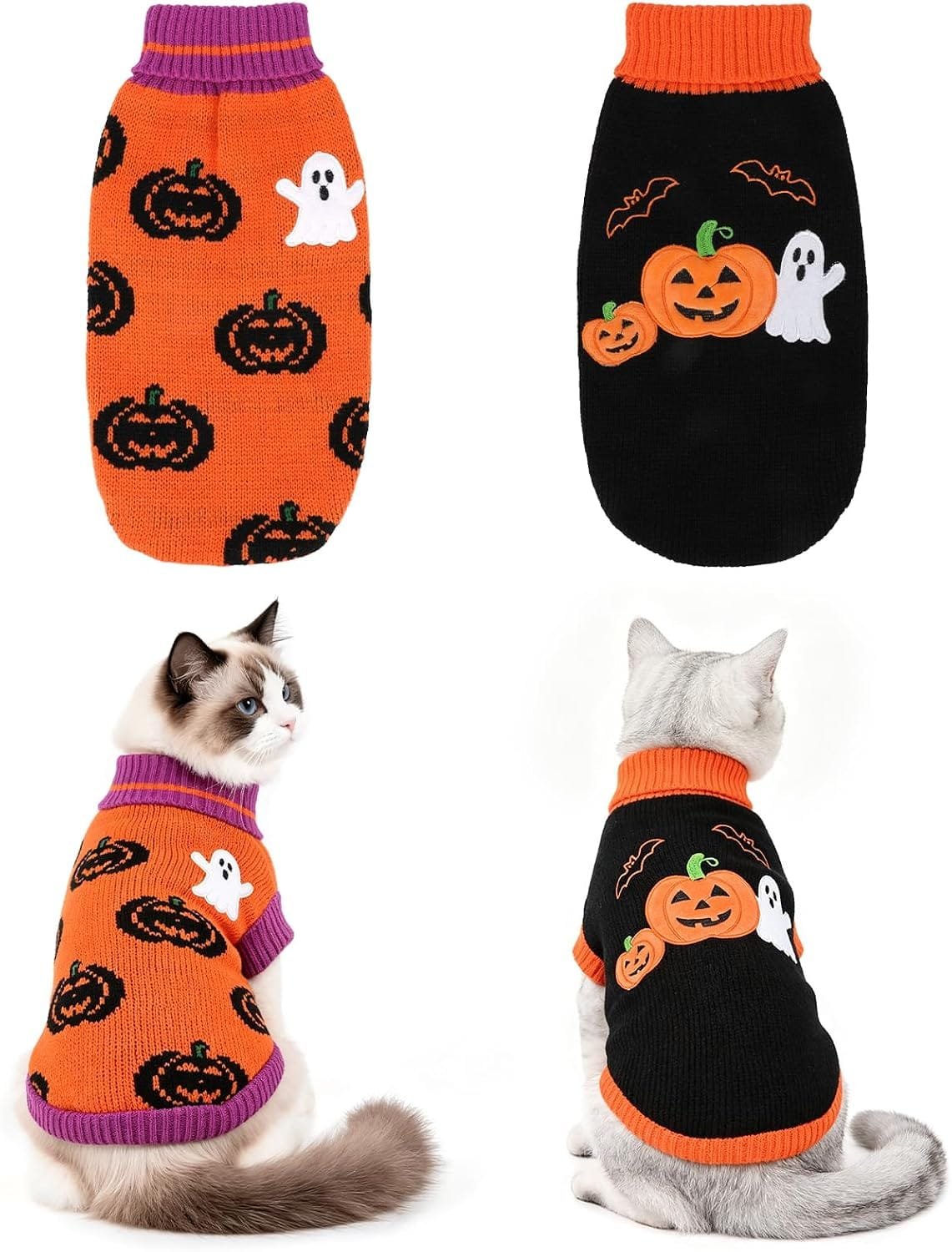 another two-pack, with a 4.3 rating from 340 reviews at around $13.99, and the cheapest of the pumpkin options. Knits can snag claws, so keep nails trimmed. Check price on Amazon.
 - CooShou Halloween Pumpkin/Boo Sweater:
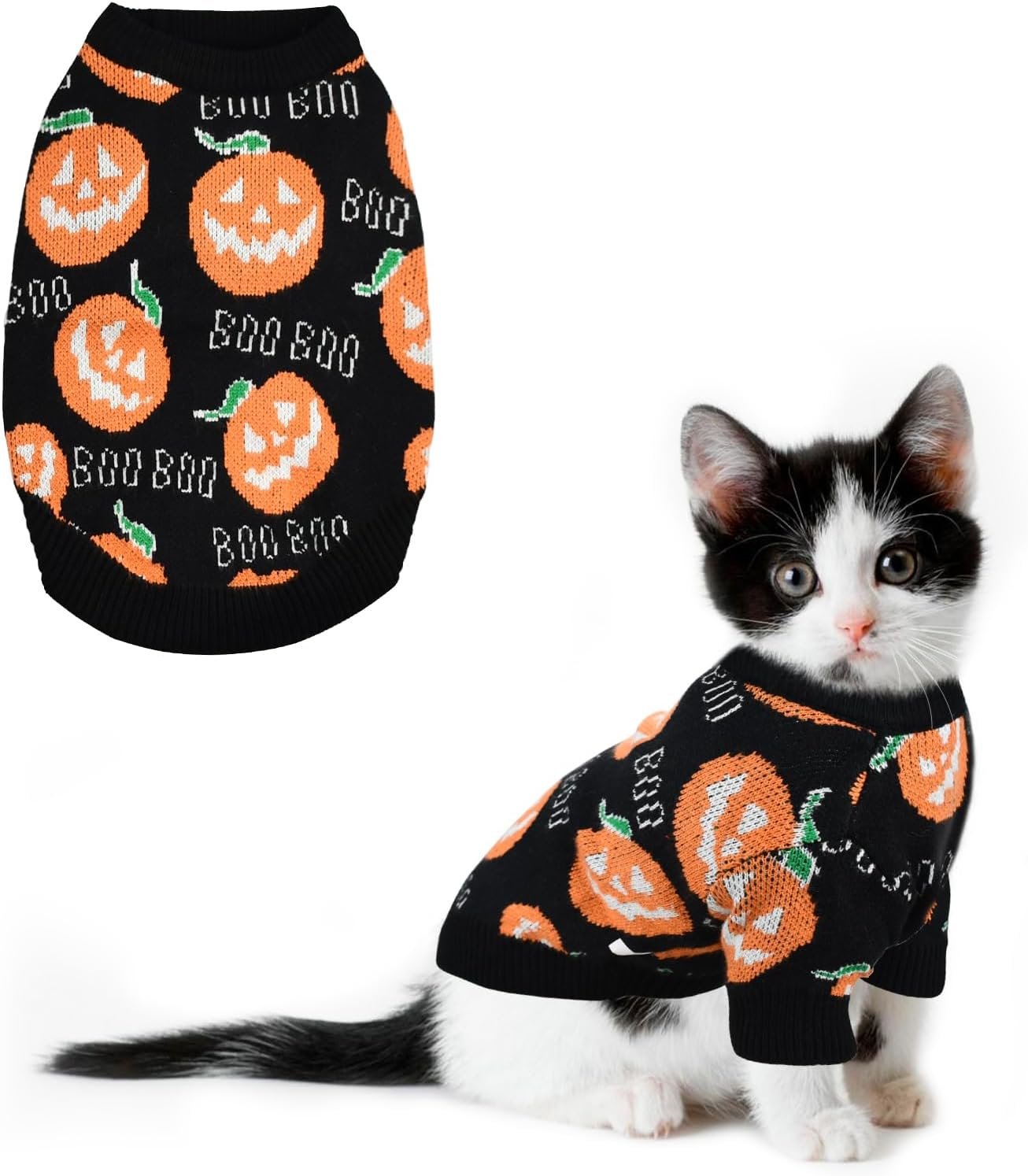 the fastest seller in my export, with an estimated 200 or more sales a month, a 4.4 rating from 142 reviews, and a price of around $11.99. Check price on Amazon.
 - KOOLTAIL Pumpkin Ghost Knit Sweater:
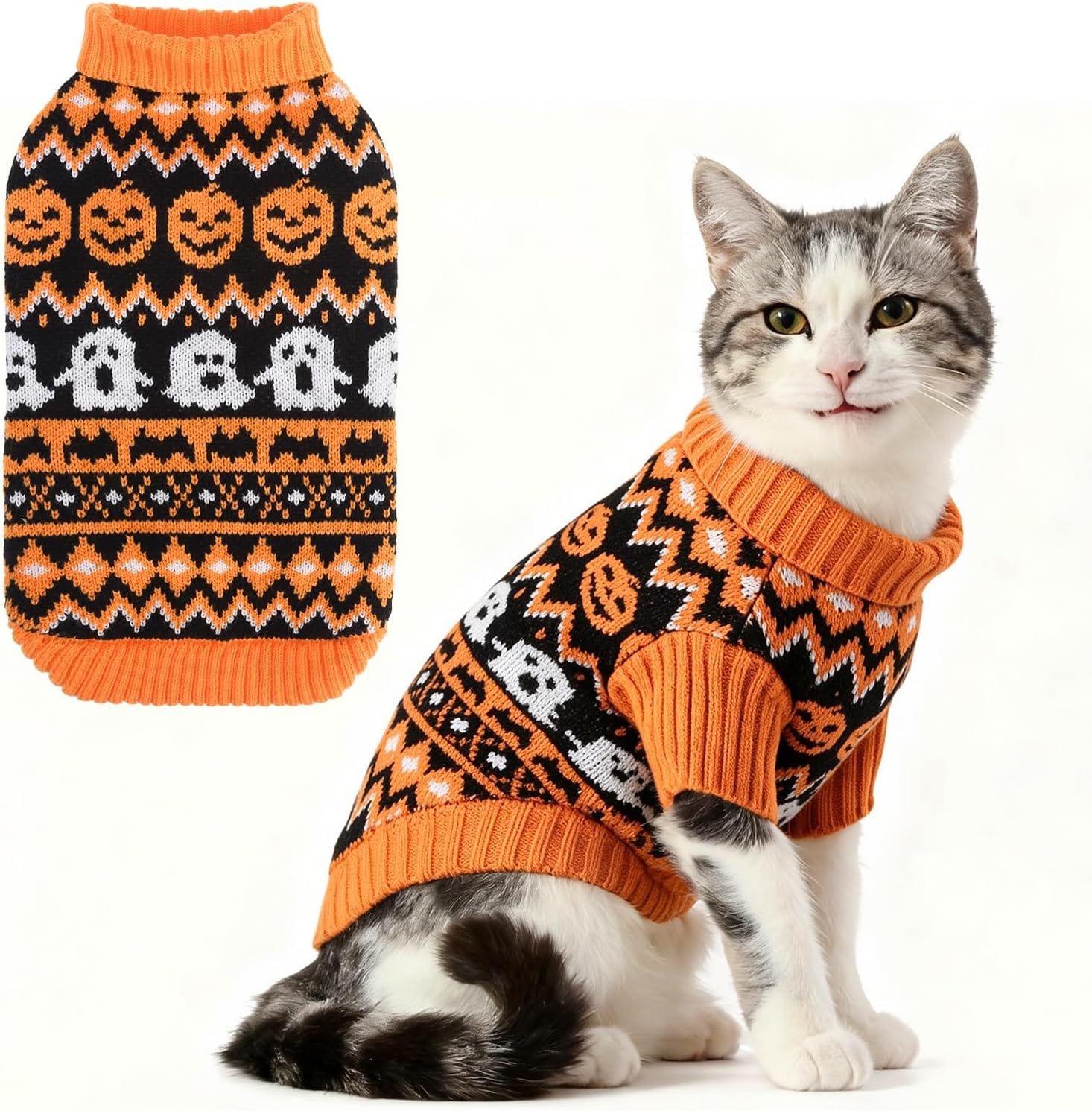 a 4.1 rating from 177 reviews at around $18.99, the priciest of the festive group. Worth it mainly if the ghost design wins you over. Check price on Amazon.
 - Tailcoat Cos Bee Costume Fleece Hoodie:
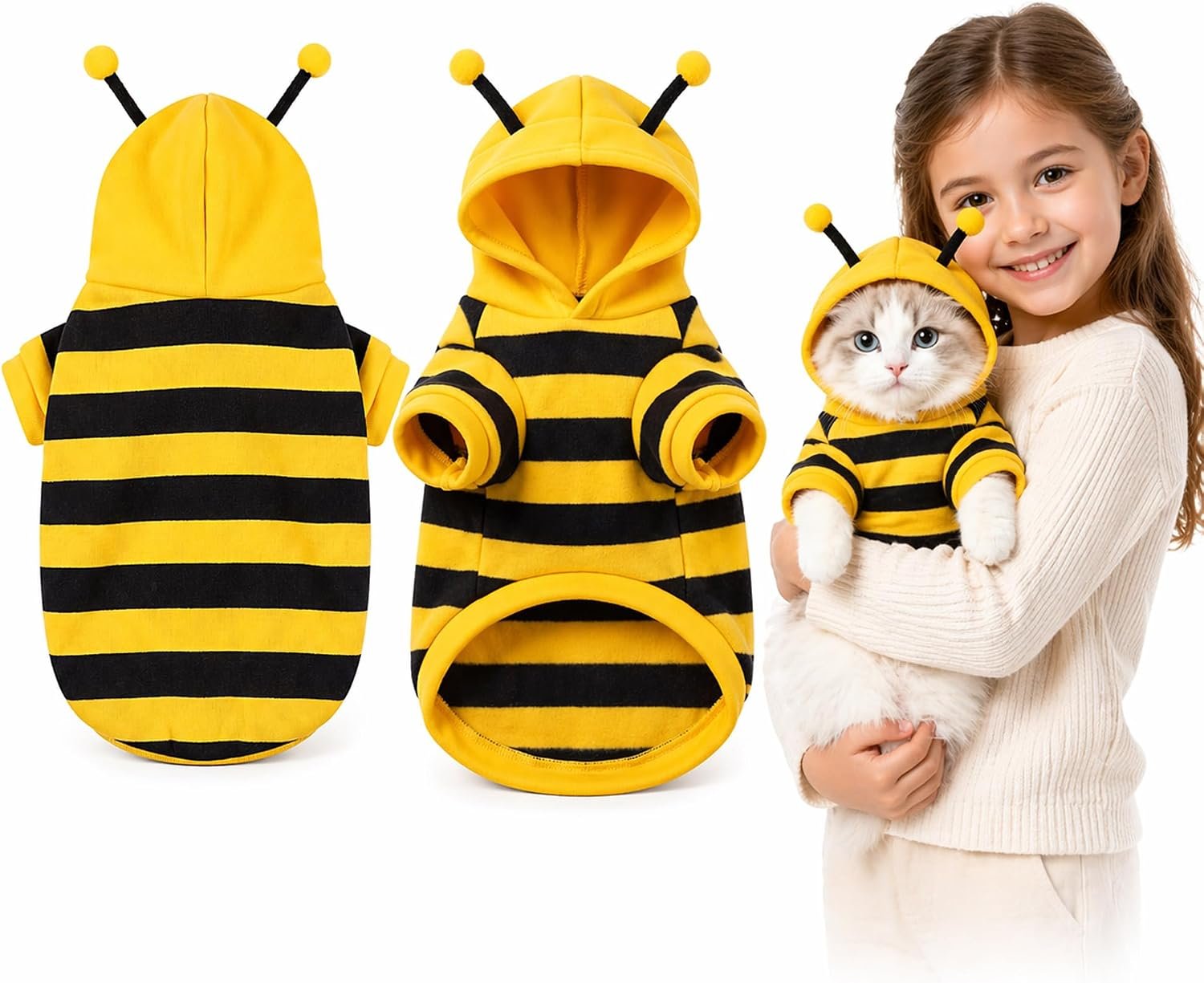 this one has only 7 reviews and a 3.8 rating at around $14.99, so I’d treat it as a photo prop and read every review first. Costume hoods can bother some cats. Check price on Amazon.
Sweater-free ways to keep your cat warm
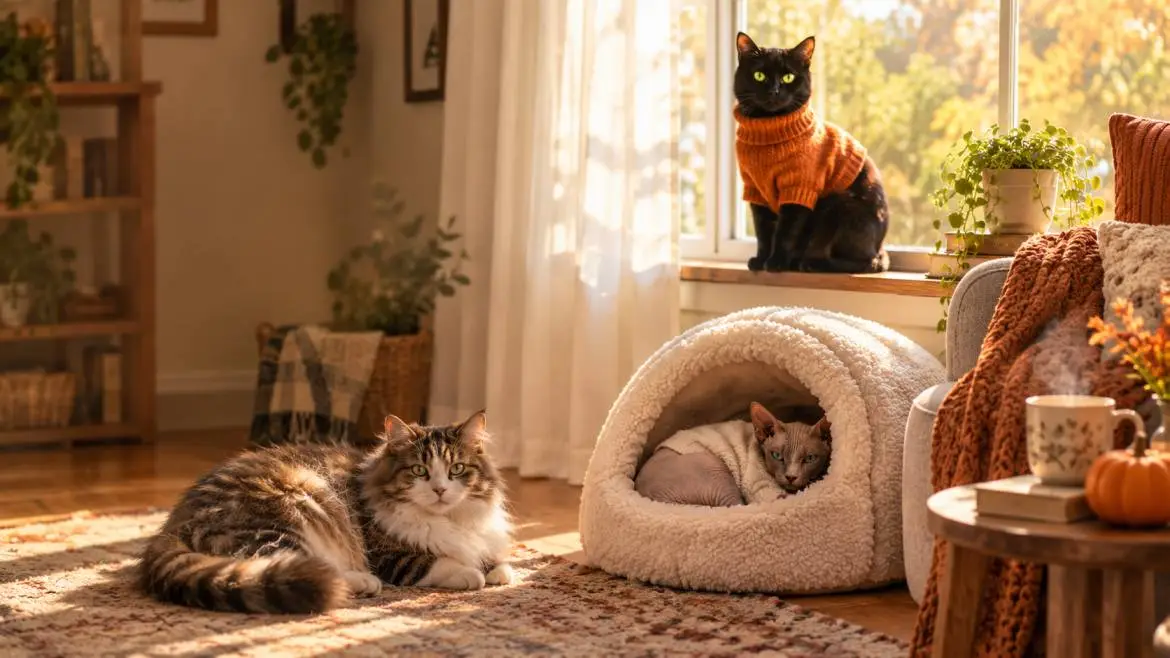
Honestly, these often do more than clothes ever will. Give your cat a warm, draft-free place to sleep, such as an igloo-style bed or a nest of soft blankets. Close off the draughtiest rooms, block gaps under doors, and let sunny window spots do their job. If you use a heated bed or pad, remember Cornell’s reminder: warm, not hot, and keep an eye on cats who can’t move away quickly.
Still setting up for the season? Our guide to cat essentials covers the everyday basics worth having at home.
Keep an eye on feeding too. How much a cat should eat depends on their weight, age, and activity level, so rather than guessing, try our cat calorie calculator to get a daily starting point, and check with your vet if your cat’s weight changes.
Quick answers to common questions
Do vets recommend cat sweaters?
Sometimes, for specific cats: hairless breeds in cold surroundings, cats shaved for surgery, and some older cats who’ve lost their coats. For healthy, fully coated cats, most vets say they aren’t needed.
What’s the best sweater for a Sphynx cat?
There’s no single best one, because it depends on your home and your cat. A light cotton layer suits a mild chill, and fleece suits a cool or air-conditioned room. Whatever you pick, make it washable, buy at least two, and check the skin underneath for redness each time you swap. The five Sphynx picks above are a good place to start.
How long can a cat wear a sweater?
There’s no universal limit. Start with a few minutes, build up slowly, and watch for overheating or stress. Hairless cats in cool homes may wear one longer, as long as it’s washed often and their skin is checked.
What material is best for cat clothes?
Soft, stretchy and breathable: thin cotton for light warmth, fleece or soft knit for more. Skip anything scratchy or fussy.
Can I make a cat sweater at home?
You can, if you use soft stretchy fabric, leave generous leg and neck openings, and avoid anything cats could chew off. Fit and safety matter more than looks. And yes, people do spin brushed cat fur into yarn, but you’d need a lot of fur.
Where can I buy a cat sweater?
Amazon has the widest range of sizes and styles, and pet stores or big-box retailers such as Walmart may stock a few options. Stock varies by location, so check yours.
My final thoughts
Cats don’t need sweaters in the same way we need coats. If yours has a full, healthy coat and a warm place to nap, they’re probably fine as they are. If you share your home with a hairless cat, a thin-coated senior, or a cat recovering from a shave, a soft, well-fitted sweater can be a real kindness. The rule I’d keep for every cat: fit first, comfort second, cuteness third, and talk to your vet if you’re unsure.
Over to you: does your cat wear a sweater, or do they stage a dramatic protest? Tell me in the comments what size and style worked for you, and I’ll add the best tips to this guide.