

Cat Scratch Solutions: Why Your Cat Scratches Everything (and the Scratchers That Actually Stop It)
Cat Scratch Solutions: Why Your Cat Scratches Everything (and the Scratchers That Actually Stop It)

This post contains affiliate links. If you buy through them, I may earn a small commission at no extra cost to you.
Cat scratch damage is one of the most common frustrations of living with a cat. You buy a perfectly good scratching post, and your cat strolls right past it to shred the arm of your sofa.
Here’s the part nobody likes to hear: you can’t stop a cat from scratching. What you can do is change where it happens. That’s the job of a good cat scratcher, and it’s what “stop it” means in this guide: stop it on your furniture.
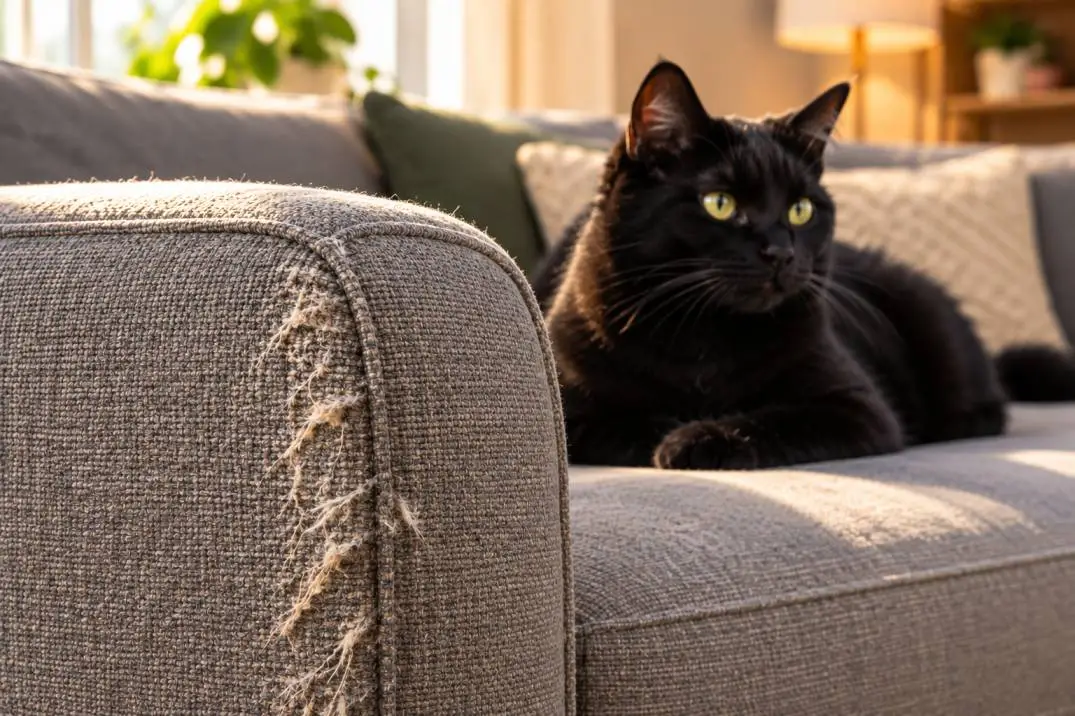
In this guide: why cats scratch, what makes a scratcher work, two scratchers worth buying, furniture protectors, deterrent sprays, a 3-week plan, and quick answers.
Quick picks
| Category | Pick | Price | Best for |
|---|---|---|---|
| Scratcher | Aidoly 54″ Cat Tree Tower | $36.89 | Small apartments, small- to medium-sized cats |
| Scratcher | EHEYCIGA 26.8″ Cardboard Cat Scratcher | around $20 | Protecting a couch arm or corner |
| Protector | FixZilla Furniture Protector | around | Several scratched corners |
| Protector | Polamg 12-Pack Sofa Guards | Mixed sizes | |
| Protector | Lovinch Vinyl Roll (160″ x 12.4″) | Long runs, custom cuts | |
| Spray | Retreat Cat Deterrent Spray | $19.99 | One problem spot |
| Spray | Dexcatly Deterrent Spray (2-pack) | $29.99 | Several problem spots |
| Spray | Anowbo Cat Deterrent Spray | $21.99 | Early adopters |
Why your cat scratches everything
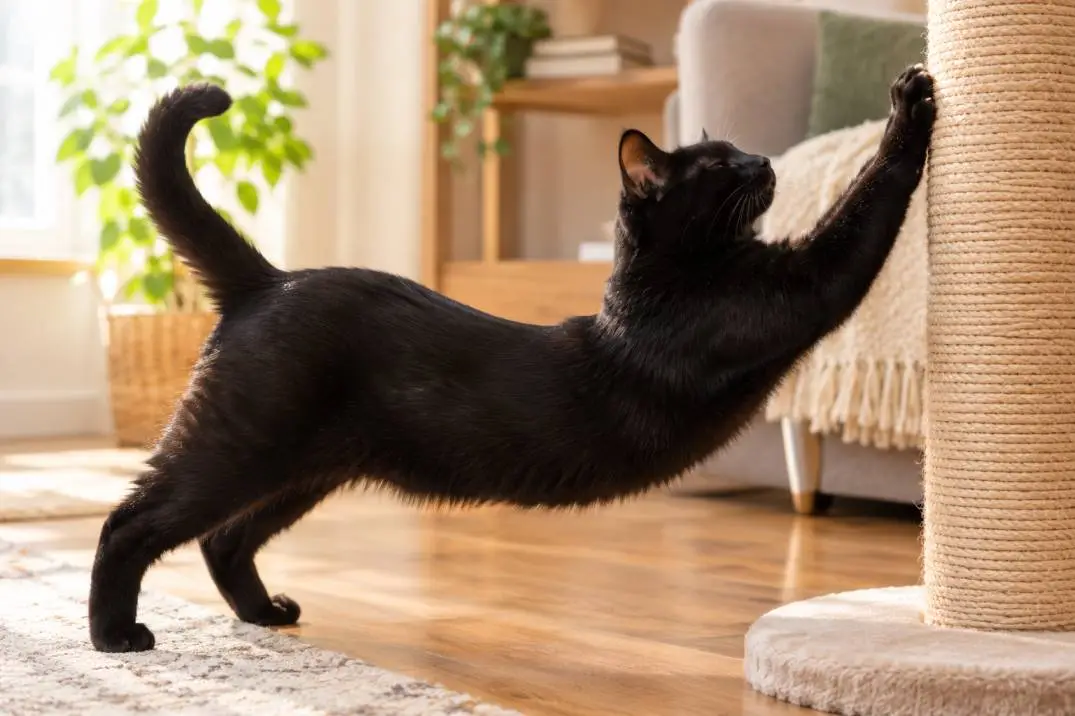
Scratching is maintenance, not mischief. It helps cats shed the worn outer layer of their claws, stretch their shoulders and back, and leave scent from glands in their paws. It’s also how they blow off excitement or stress, which is why you’ll see a big scratch session right after a nap or when you walk in the door.
So why the couch? It’s tall, sturdy, nicely textured, and sits right where you spend your evenings. Cats scratch to mark the places where life happens, so your living room is prime real estate. If the “official” cat scratching post lives in a back bedroom, the couch wins every time.
What makes a cat scratcher actually work?
Whatever you buy, check four things:
- Tall or long enough to stretch. Your cat should be able to extend fully.
- Sturdy. A wobbly cat scratching post gets abandoned fast.
- Right texture. Sisal is tough and lasts. Jute is softer and wears out sooner. Cardboard is cheap, satisfying to shred, and messier.
- Right location. Put it beside the spot your cat is already targeting, not down the hall.
Not sure what your cat prefers? Offer one sisal option and one cardboard cat scratcher and see which one gets used.
Scratcher #1: Aidoly 54″ cat tree (best for small apartments)
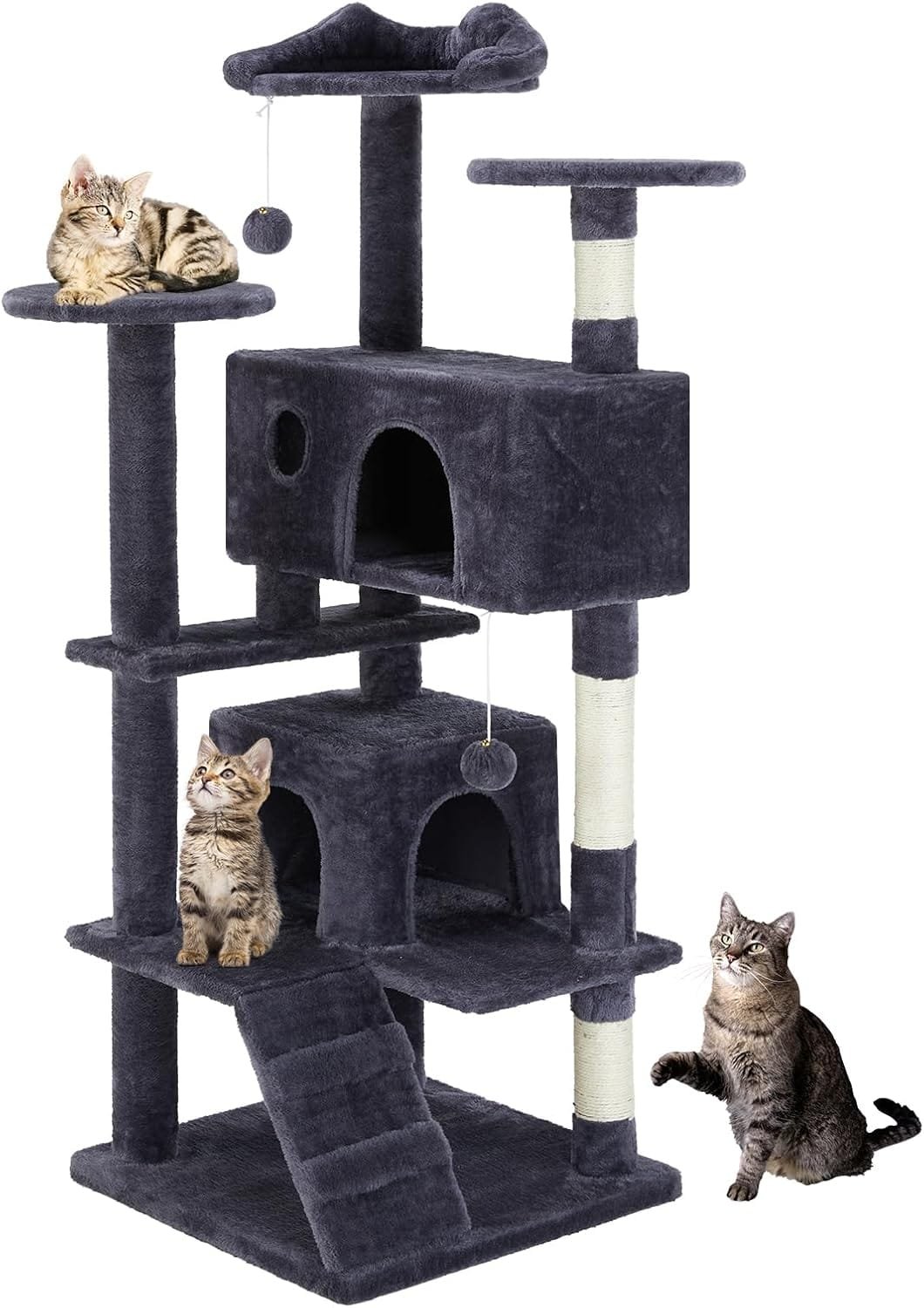
When floor space is tight, go vertical. This tree is roughly 19.7″ by 19.7″ and stands 54″ tall, with three top perches, two condos, three sisal rope pillars, dangling balls, and a ramp. That’s under 3 square feet of floor for a climbing, scratching, and napping station. It also comes with an attachment for securing it to a wall. $36.89. Explore the current price on Amazon for the Aidoly 54″ cat tree
Good fit: one or two small to medium cats, kittens, renters with limited space.
Not a great fit: big cats, or heavy-duty scratchers.
Scratcher #2: EHEYCIGA cardboard cat scratcher (best for protecting the couch)
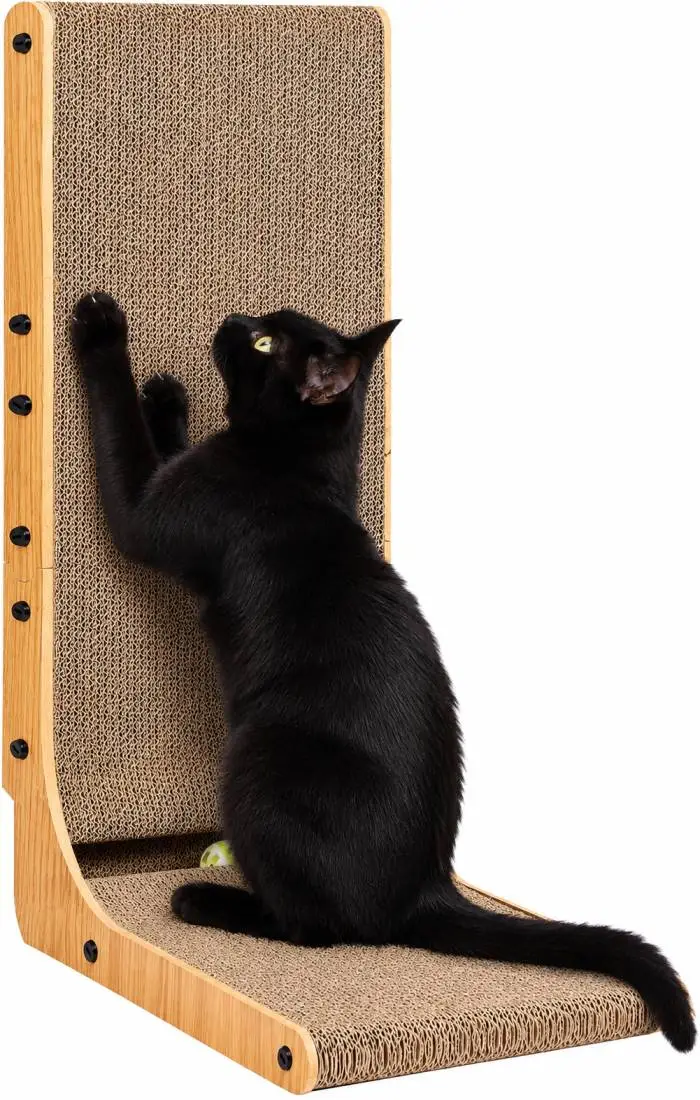
This is the one I’d put right beside the sofa arm. It’s an L-shaped cardboard scratcher, sold as a vertical scratching board with a toy ball and listed as a furniture protector, and it carries the Best Seller label in Cat Scratching Pads on Amazon.
Cardboard is the budget option, and it has trade-offs. It sheds little cardboard bits, and it wears down, so plan to replace it every so often. If your cat ignores it at first, rub a little catnip on it. Because it’s cheap, it’s the lowest-risk way to find out whether your cat is a cardboard cat. See the current price on Amazon for the EHEYCIGA cardboard cat scratcher.
Furniture protector for cats: a physical barrier that buys you time
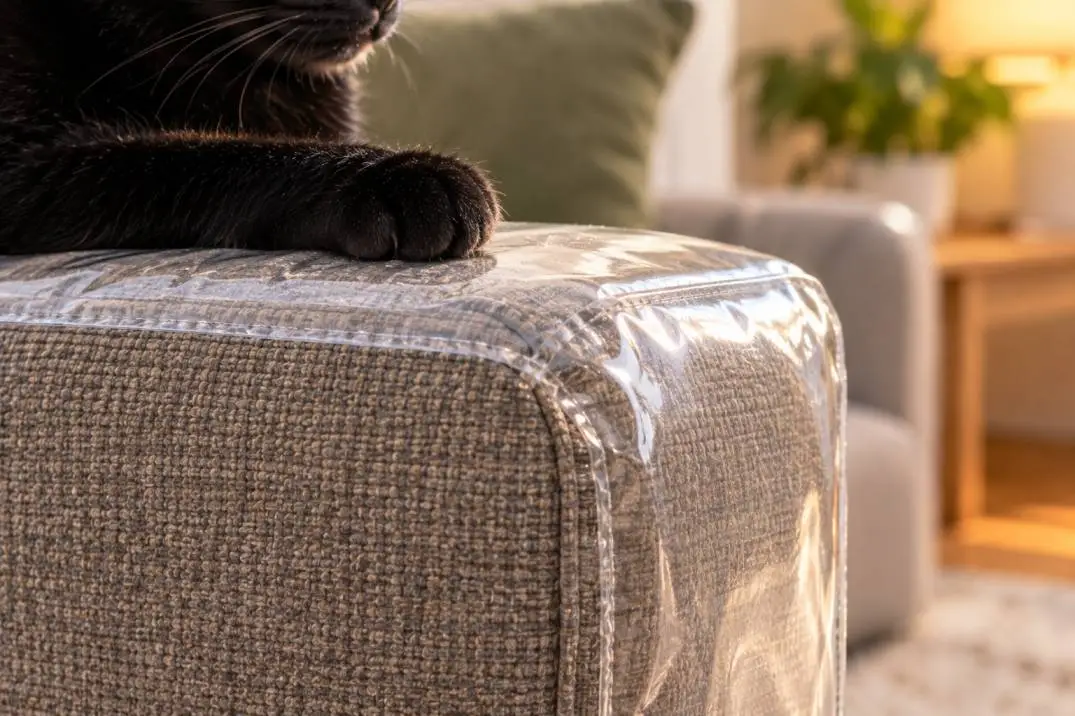
Scratchers work on your cat’s motivation. A furniture protector for cats works on the surface itself. A clear sheet or sticky tape over the exact spot your cat favors means claws meet slippery plastic or a sticky texture instead of fabric. That protects the couch while the new habit forms. It doesn’t change why your cat scratches, so treat it as a stopgap, not a fix, and always put a scratcher right in front of it.
How to use it:
- Clean and dry the spot first. Dust and pet hair kill adhesion.
- Cover the whole scratched area, plus a little extra. Cats often move to the next uncovered edge.
- Place the scratcher directly in front of the covered spot.
- Keep it up for a few weeks, then try removing one piece at a time.
Three options:
FixZilla Anti Cat Scratch Furniture Protector.
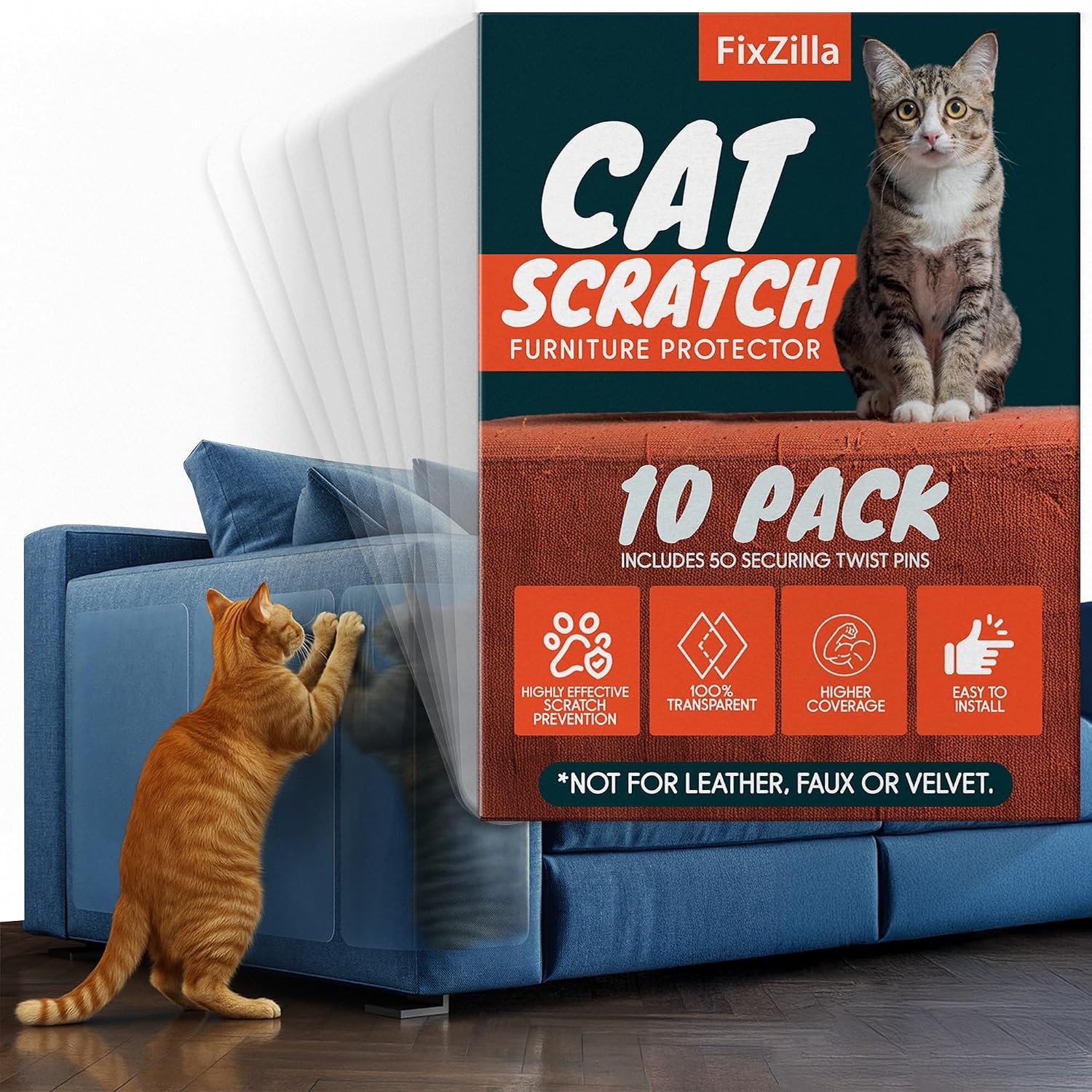
It carries Best Seller labels on Amazon, and the 10-pack comes with 50 twist pins. It’s clear sheets you pin or stick on, sold in several pack sizes. Good for a couch with a few scratched corners and arms.
Polamg 12-Pack Clear Sofa Guards.
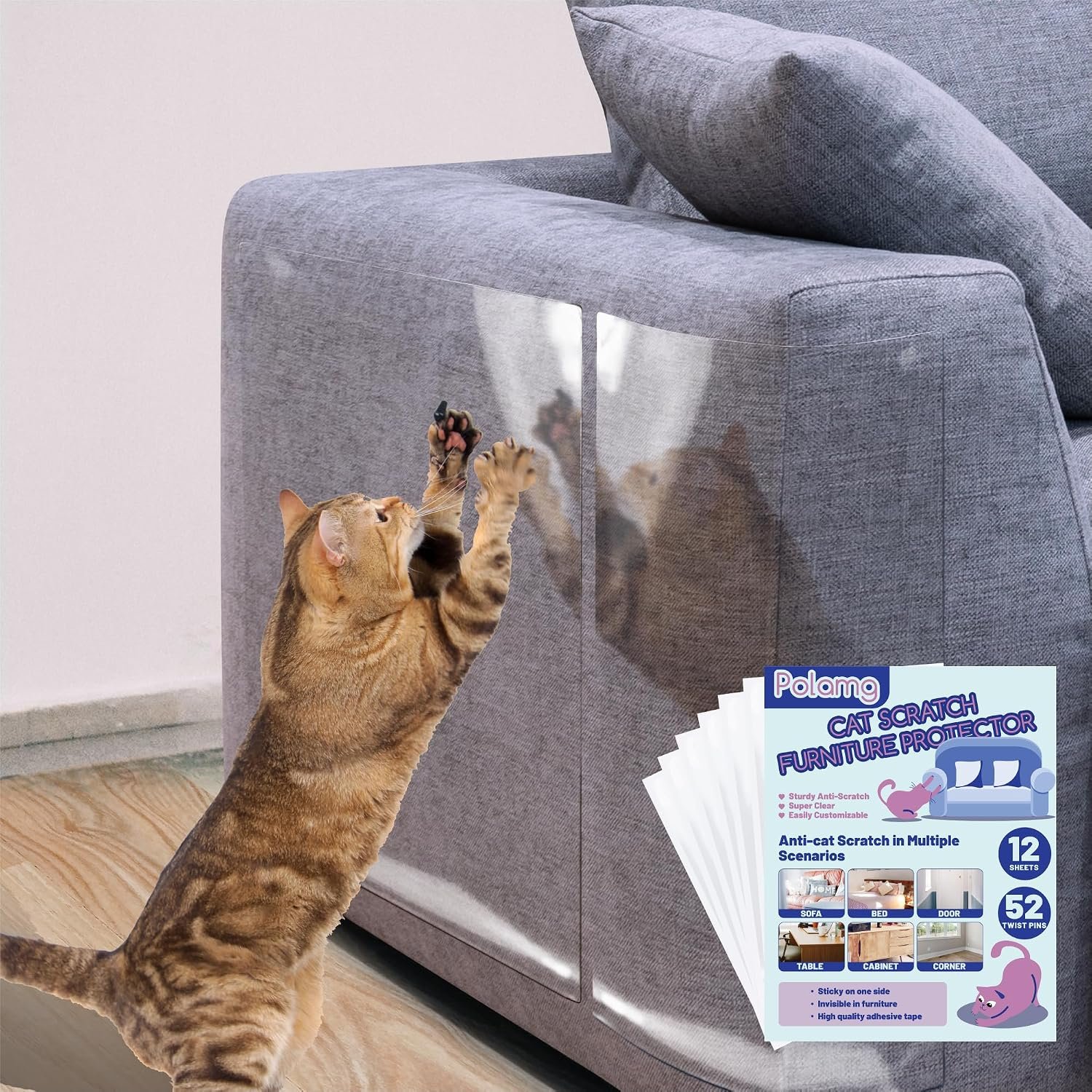
Another best seller in the category, with 12 clear sheets in two sizes, 52 twist pins, and a self-adhesive, cuttable design. Over 2,000 were bought in the past month. The mix of sizes helps if you’re covering arms and corners at once. Explore the current price on Amazon for Polamg cat scratch furniture
Lovinch Thick Vinyl Protector (160″ x 12.4″).
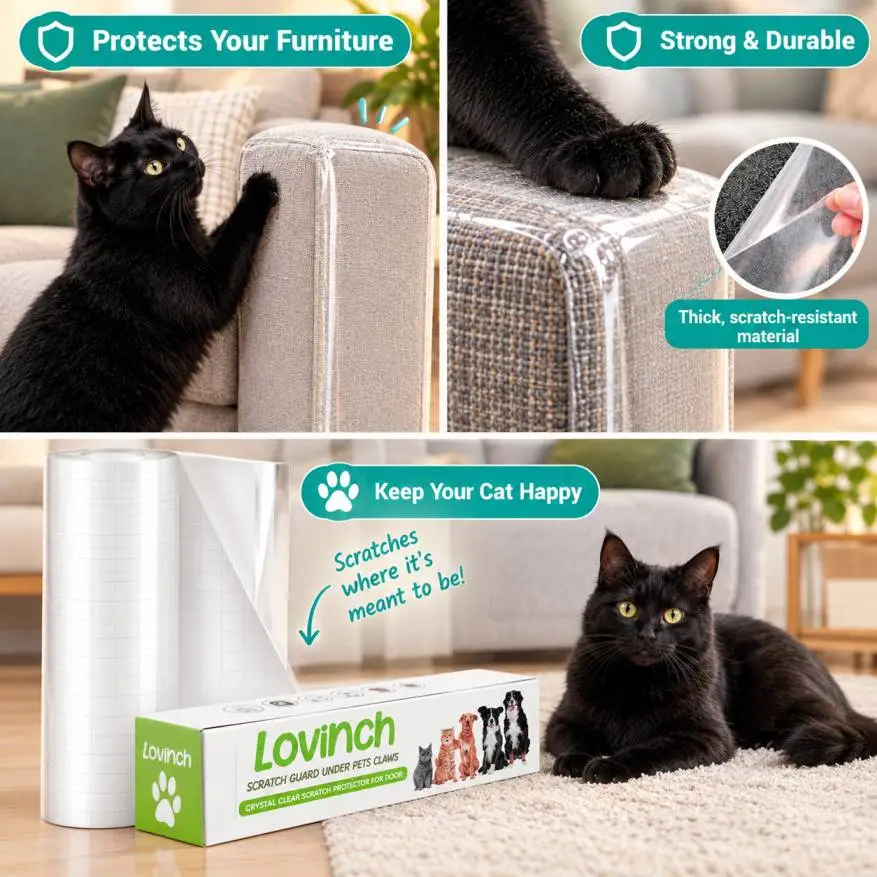
This one has the Amazon’s Choice label. It’s a thick, flexible vinyl roll with a single sticky side, made as a couch corner guard. A roll suits long runs and odd shapes because you cut it to fit. See the current price on Amazon for the Lovinch Thick Vinyl Protector
How I’d choose: a few scratched corners—go FixZilla or Polamg. A long arm or an awkward shape, go with the Lovinch roll. Double-sided sticky tape is the cheapest route. Cats dislike sticky paws, and it works the same way.
What to watch for:
- Fabric damage. Pins leave tiny holes, and adhesive can mark delicate fabrics. Some sheet-style protector listings specifically say not to use them on leather, velvet, or microfiber. Read the fabric notes and test a hidden spot first.
- Pins. Check weekly that every pin is fully seated. A loose one is a hazard for paws and mouths.
- Peelers and chewers. If your cat picks at the plastic or chews it, take it off. Swallowed plastic is a vet visit.
- Looks. Even clear sheets are visible. You’re trading some looks for protection while the habit changes.
When you want one more layer: deterrent sprays
A scratcher says yes. A deterrent spray says “not here.” Most use a bitter taste or a scent cats dislike on one surface. Used alongside a scratcher, they can help stop cat scratching couch corners while the new habit forms. They work best when a better option sits right next to the sprayed spot, you stay consistent for a few weeks, and you reapply, because the effect fades. I can’t promise a spray will work on your cat. Some cats shrug it off.
Safety first:
- Patch test. Spray a hidden corner and let it dry. Some products stain leather, velvet, and light fabrics.
- Read the ingredient list. “Natural” doesn’t automatically mean cat-safe. I’d steer clear of tea tree, pennyroyal, wintergreen, and concentrated citrus oils. If a listing doesn’t say what’s in the bottle, keep scrolling.
- Never spray the cat, their bedding, or things they chew or lick a lot. Ventilate and let it dry.
- Ask your vet first if your cat has asthma or other breathing problems.
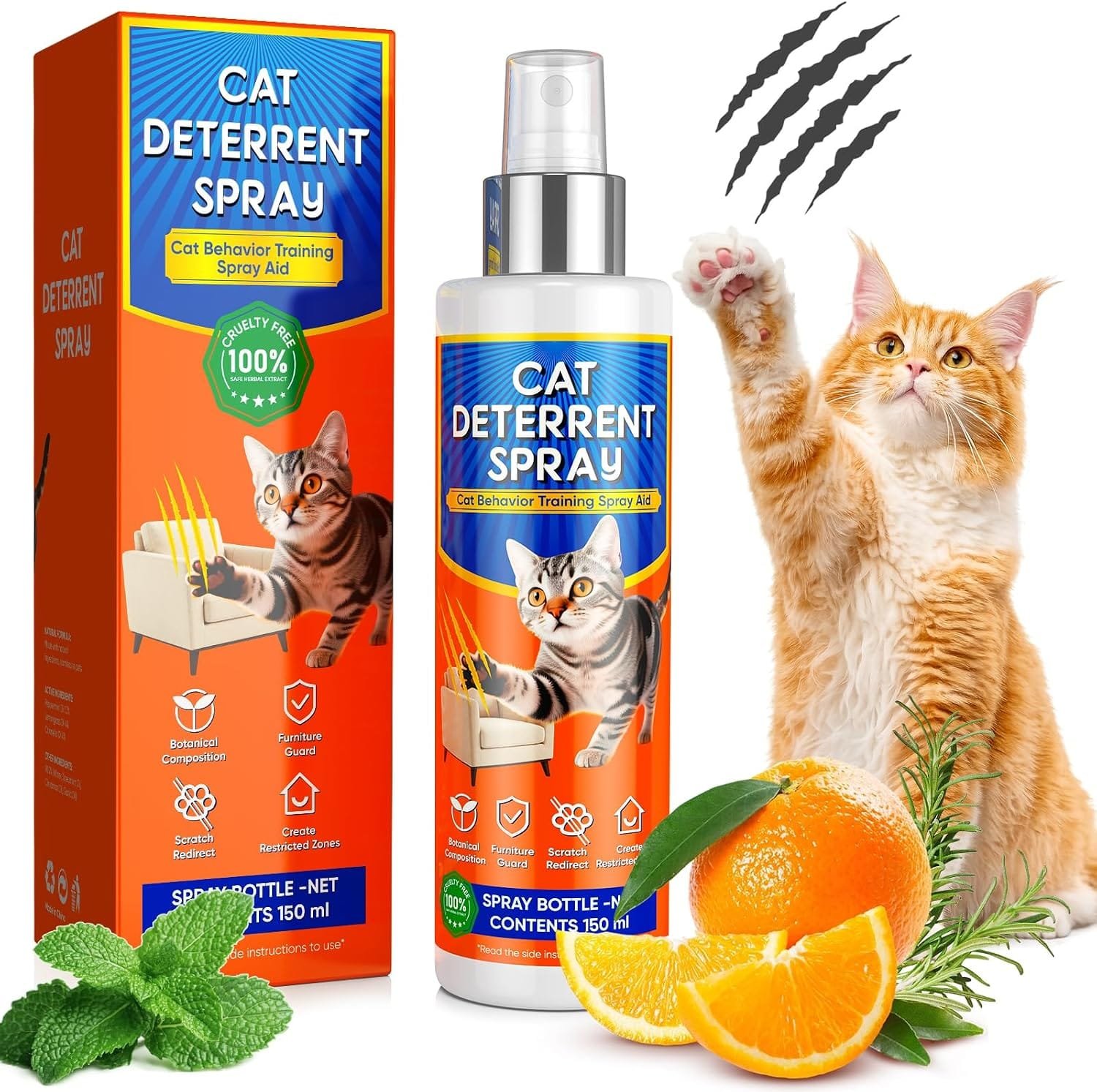
The cheapest way to find out whether your cat cares about sprays at all. Start here if you have one stubborn spot.
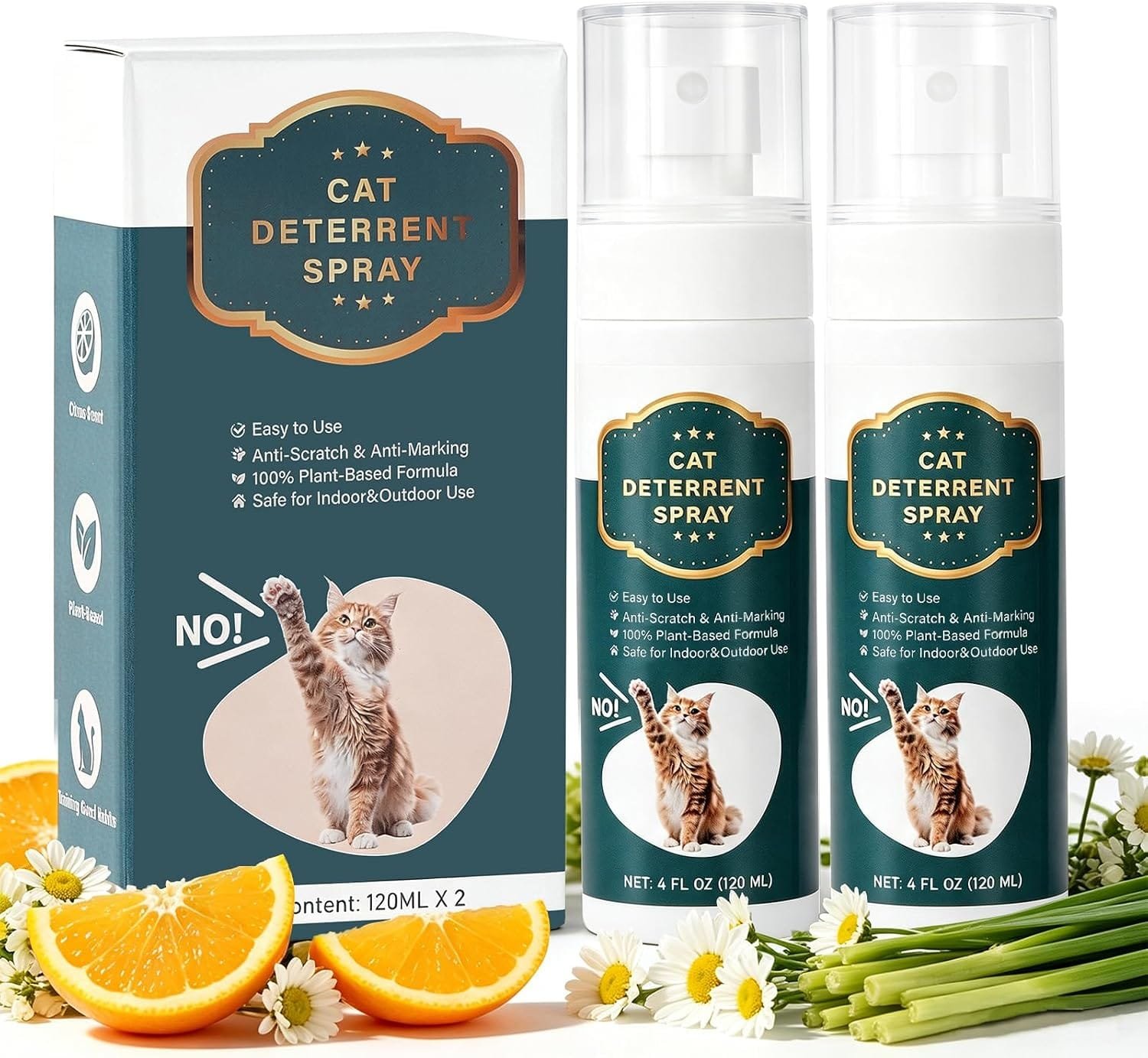
If the couch, the bedroom door, and the curtains are all under attack, two bottles let you keep one in each area. That works out to roughly $15 a bottle.

The newest of the three, with no sales history yet, so I can’t tell you how it performs. It’s a fair price if you’re happy to be an early tester.
How I’d choose: one problem spot, go to the restaurant. Two or more, go Dexcatly. Feeling adventurous, try Anowbo.
How to stop cat scratching couch damage: a 3-week plan
- Week 1: Put the scratcher right beside the damaged spot and cover the damaged area with a furniture protector. Reward any use of the scratcher with a treat or play.
- Week 2: Patch test, then spray nearby surfaces you can’t cover. Add catnip or silvervine to the scratcher if your cat responds to it. Keep nails trimmed.
- Week 3: Check progress. If your cat is using the scratcher, start removing the protector one piece at a time. If the couch is still a target, keep everything in place for another couple of weeks.
And please don’t declaw. It’s an amputation of the last bone of each toe, not a manicure, and it doesn’t fix the need to scratch.
Quick answers
Do indoor cats need a cat scratching post? Yes. Scratching is a need, not a hobby.
At what age do cats need one? As soon as they start scratching, usually within the first couple of months.
What do cats like to scratch most? Rough, sturdy surfaces they can stretch against: sisal, cardboard, rough wood, and carpet. Couches check most of those boxes too.
Cardboard cat scratcher or sisal? Both work. Sisal lasts longer. Cardboard is cheaper, and many cats love shredding it.
What’s a good furniture protector for cats? Clear couch guards or double-sided tape on the damaged spot, plus a scratcher placed right in front of it. FixZilla, Polamg, and Lovinch are three options on Amazon. Test a hidden spot first.
Do deterrent sprays really work? Sometimes. They work best as one part of a plan that includes a better place to scratch.
If you only do one thing this week, put a sturdy scratching surface right next to the spot your cat keeps targeting, then give it three weeks. Cat scratch behavior won’t disappear, but it can move off your furniture.