

The Black Cat Myth vs. The Real Story: Superstition, Symbolism, and Adoption Bias
The Black Cat Myth vs. The Real Story: Superstition, Symbolism, and Adoption Bias
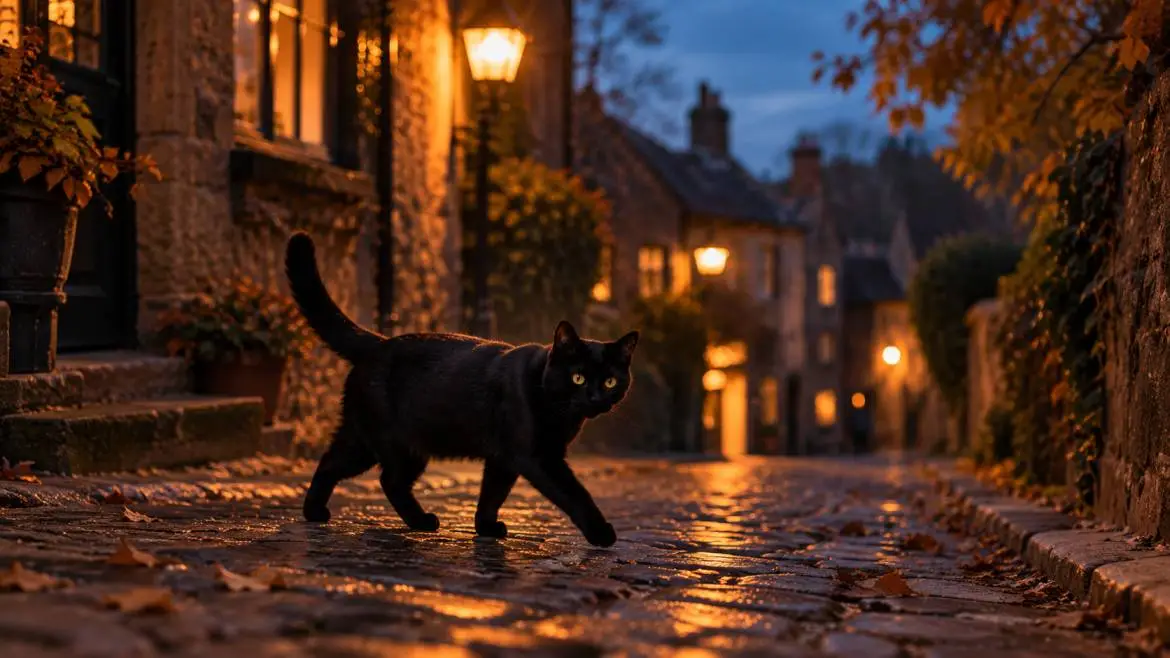
One of these beliefs is centuries-old folklore. The other is a documented problem happening in shelters right now—and only one of them actually deserves your attention.
A black cat crosses your path, and something in the back of your mind flinches, even if you don’t consider yourself superstitious. That reaction is centuries in the making, and almost none of it holds up once you actually trace where it came from. Meanwhile, there’s a real, measurable problem affecting black cats today that has nothing to do with luck at all—and it’s the one part of this story that’s easy to miss while everyone’s busy debating omens.
Key takeaways
- The “bad luck” myth is regional, not universal—in Japan, Scotland, and England, a black cat is a sign of good fortune.
- Cats aren’t mentioned in the Bible at all—not black cats, not any cats. The devil association is mediaeval folklore, not scripture.
- Solid black is actually the most common coat color in domestic cats, not a rare one.
- Black cats face a real, documented adoption disadvantage in U.S. shelters, confirmed by multiple peer-reviewed studies.
- The most likely cause isn’t superstition directly—it’s that black cats are harder to photograph well and harder for people to “read” emotionally in adoption photos.
Where the “bad luck” myth actually came from

Cats, including black ones, weren’t always the villain. In ancient Egypt, cats of every color were considered sacred, closely tied to the goddess Bastet, and harming one was treated as a serious offense. The turn toward suspicion didn’t happen until centuries later, in mediaeval Europe. According to Britannica, Pope Gregory IX issued a declaration in 1233 linking black cats to the devil, and from there the association with witchcraft took hold—black cats were increasingly believed to be witches’ “familiars,” or even witches themselves in disguise. That belief hardened during the witch trials of the 14th through 18th centuries, and it’s largely where the modern “bad luck” reputation comes from: not ancient instinct, but one specific religious and cultural moment that stuck around far longer than the trials themselves.
It’s not even a universal belief.

Here’s what gets left out of most retellings: the “bad luck” association was never worldwide, and it still isn’t. In Japan, black cats are considered good luck, especially for single women hoping to attract suitors, and black maneki-neko (beckoning cat) figurines are specifically believed to ward off evil. In Scotland, a black cat arriving at your home is said to bring prosperity. In England and much of Asia, a black cat crossing your path is actually the opposite of the American superstition—it’s a sign of good fortune, not bad. Even within the U.S., some regions carry a different, gentler version: a black cat on your porch is sometimes said to bring good luck to the household. The “bad omen” reading is a regional inheritance, not a fact about the animal.
What does the Bible actually say about black cats?
Nothing—and that’s true of cats in general. Cats of any color are never mentioned by name in the canonical Old or New Testament. Lions, dogs, and eagles all get their moments in scripture; the domestic cat doesn’t appear at all. The “black cats are evil” idea some people trace to religion is actually a mediaeval cultural layer laid on top of Christianity during the witch-trial era, not something rooted in the text itself. If someone tells you the Bible warns against black cats, that’s folklore borrowing religious authority it never actually had.
Are solid black cats even rare?
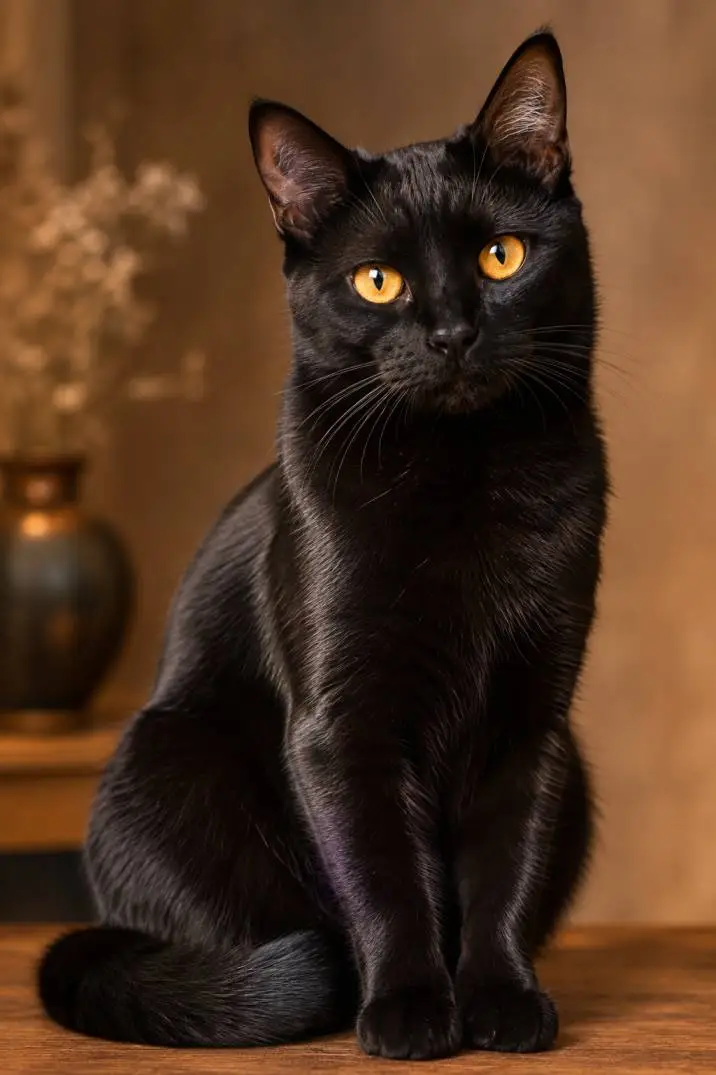
Not even close—if anything, it’s the opposite. According to Cats.com, the gene for black fur is dominant and common in the domestic cat population, which is exactly why black is one of the most frequent coat colors you’ll see in shelters. There is one genuine rarity hiding in this topic, though: the Bombay, a breed developed in the 1950s specifically to look like a miniature black panther, is the only breed where a fully solid black coat, down to the nose, leather, and paw pads, is a strict requirement. Most other “black” cats, including the vast majority of shelter cats, are mixed-breed domestic shorthairs, and about 20 to 30 recognized breeds can produce a black coat as one option among several. One genuinely fun fact: black cats can “rust” in strong sunlight, since the black pigment (eumelanin) breaks down under UV exposure, sometimes revealing faint tabby stripes that were hiding underneath the whole time.
What about the “$100,000 cat” people keep searching for?
This one’s worth clearing up, since it’s easy to assume it’s about black cats specifically—it isn’t. The cat breed that regularly gets quoted at $100,000 or more is the Ashera, a rare hybrid developed from Asian leopard cat, African serval, and domestic cat lineages, prized for its size and wild-cat appearance rather than its color. It has nothing to do with black cats being expensive or rare; it’s a completely separate, unrelated search trend that happens to overlap in the data.
Meet Tommaso: the black cat worth $13 million.
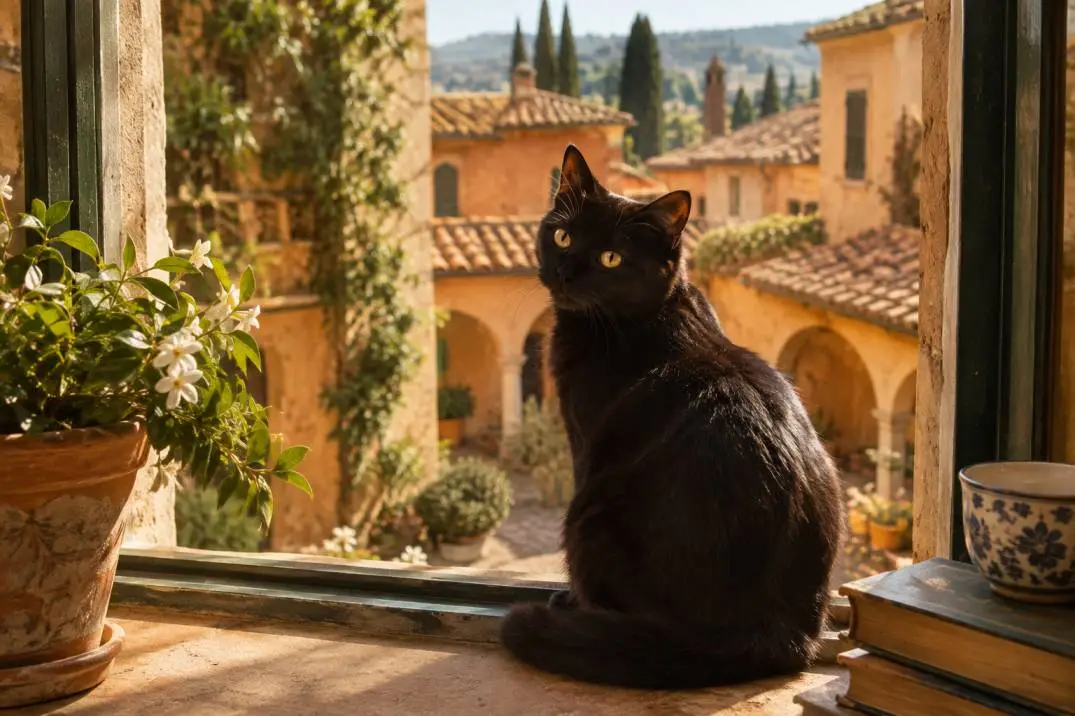
If you want a genuinely charming rebuttal to the “bad luck” myth, this one’s real and verifiable: Tommaso, a black stray cat rescued off the streets of Rome, inherited roughly $13 million in 2011 from his owner, an elderly Italian widow named Maria Assunta, who had no children and wanted her cat cared for after she passed. The fortune included cash and property across Rome, Milan, and Calabria. Tommaso remains one of the wealthiest animals ever recorded—which is a fairly strong counterpoint to the idea that a black cat crossing your path is bad news.
The real story: black cat adoption bias
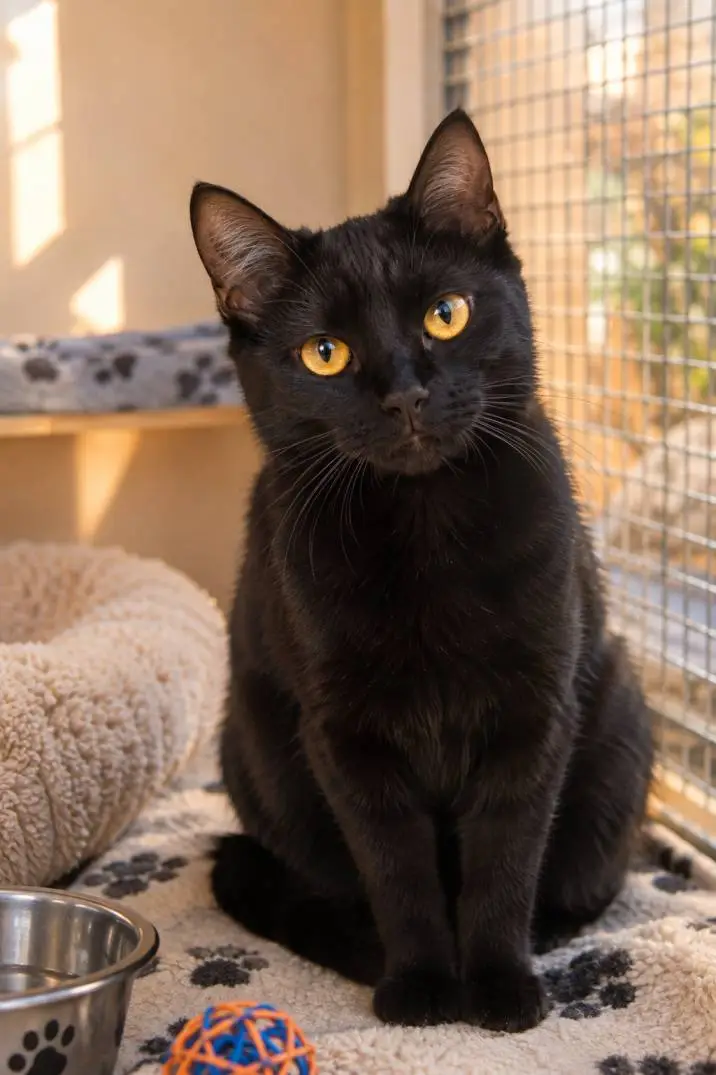
This is the part of the topic that actually deserves your attention, because it’s not folklore—it’s documented, peer-reviewed, and still happening. Research reviewed by AAHA covering nearly 8,000 cats across Kentucky shelters, along with a separate analysis of over 29,000 cats across two additional shelters, has confirmed that black cats face measurably lower adoption rates and longer shelter stays than cats of other colors. In some shelters, black adult cats waited close to six days longer on average than non-black cats; black kittens waited around four days longer. The pattern, often called “black cat bias,” has been documented enough times across enough shelters that researchers now treat it as a real, if modest, effect rather than a coincidence.
What’s genuinely interesting is that the cause probably isn’t superstition itself, at least not directly. A recent 2026 study found that participants consistently rated black cats as less adoptable and harder to “read” emotionally in online shelter photos, more often describing them as looking fearful or angry, even though self-reported superstitious beliefs didn’t predict these ratings. The more likely culprits are practical: black fur is genuinely harder to photograph well, subtle facial expressions are harder to see in low contrast, and black cats are frequently kept in dim shelter lighting where their features simply don’t show up as clearly. Ironically, some shelters have historically tried to help by restricting black cat adoptions during October over fears of ritual harm—but researchers have found this tends to backfire, leading to fewer adoptions and higher euthanasia overall rather than protecting anyone.
What you can actually do about it
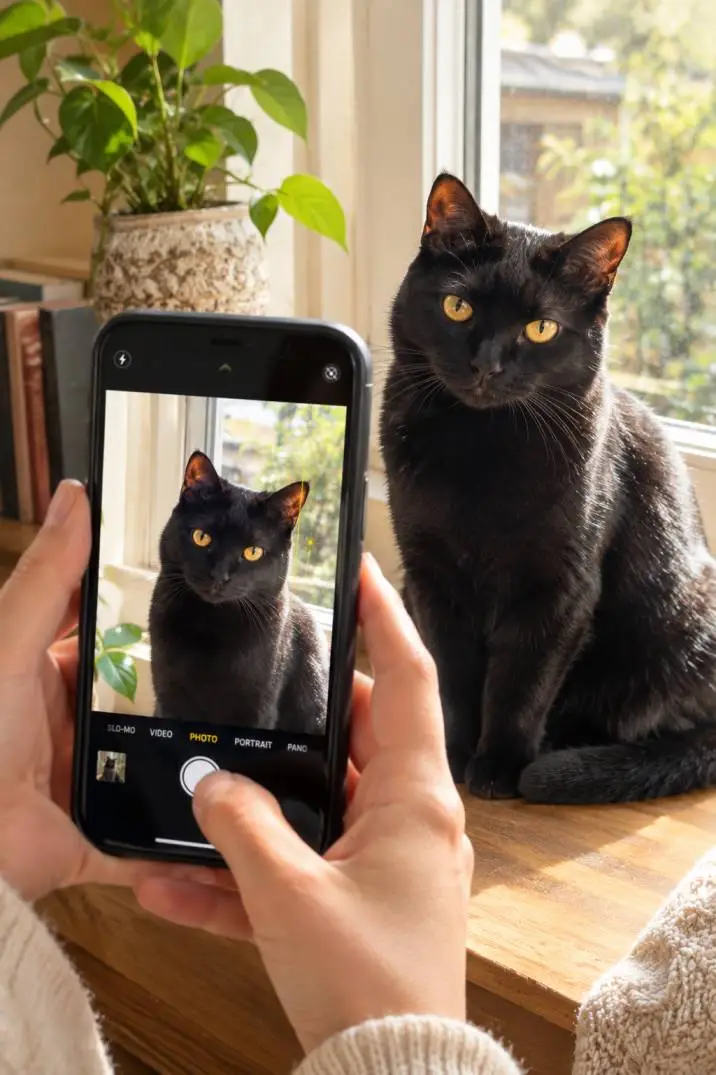
If any part of this story deserves action rather than just interesting trivia, it’s this one. A few things genuinely help: sharing well-lit, natural-light photos of black cats (indirect daylight shows off their features far better than harsh shelter fluorescents), visiting shelters in person rather than judging by photos alone, and simply being willing to meet a black cat before deciding against one. If you’ve already got a soft spot for black cats specifically, consider that you’re not fighting superstition by adopting one—you’re fighting a genuinely fixable photography and lighting problem, which is a much easier thing to help solve.
If you’re already deep into Halloween season planning for your own cat, you might also enjoy our guide to Halloween costumes for cats, which covers what’s actually safe and comfortable to try.
Frequently asked questions
Is seeing a black cat a good omen or bad luck?
It depends entirely on where you are. In the U.S. and much of Western Europe, the superstition leans toward bad luck, rooted in mediaeval witch-trial folklore. In Japan, Scotland, England, and Russia, a black cat is traditionally considered good luck instead. There’s no universal answer, and there’s no scientific basis for either belief.
Is there a Bible verse that mentions black cats?
No. Cats aren’t mentioned by name anywhere in the canonical Old or New Testament, regardless of color. Any claim connecting black cats to evil through scripture is drawing on mediaeval folklore, not the biblical text itself.
Are 100% black cats rare?
No—black is genetically one of the most common coat colors in domestic cats. The one exception is the Bombay breed, which is the only breed required to be fully solid black by its official breed standard; most other black cats are mixed-breed shorthairs, which are common rather than rare.
Do black cats really struggle to get adopted?
Yes—this part isn’t folklore. Multiple peer-reviewed studies of thousands of shelter cats have confirmed black cats face longer average shelter stays and lower adoption rates than other colors, a pattern researchers call “black cat bias.”
Why are black cats least likely to be adopted?
The leading explanation isn’t superstition directly, but practical visibility: black fur is harder to photograph well, and people have more difficulty reading facial expressions and emotions in black cats’ photos, which makes them seem less approachable in online listings even when their personalities are no different from any other cat’s.
What cat is worth $100,000?
That figure usually refers to the Ashera, a rare hybrid breed crossing Asian leopard cat, African serval, and domestic cat lineages—not to black cats. It’s a completely separate topic that happens to show up in similar searches.
What does a black cat symbolize?
Historically, it depends on the culture: protection and prosperity in ancient Egypt and modern Japan, witchcraft and misfortune in mediaeval-to-modern Western Europe and the U.S. There’s no single, agreed-upon symbolic meaning—just centuries of regional folklore layered on top of an ordinary cat.
The bottom line
The superstitions around black cats are genuinely fascinating history, but they’re exactly that—history, regional folklore, and, in the case of the Bible claim, simply untrue. The part of this story that’s actually still happening and actually affects real cats waiting in shelters today is the adoption gap. That’s the one worth carrying with you past this article: not “Is a black cat bad luck?” but “Is there a black cat nearby who just needs a better photo and someone willing to look past it?”
Do you have a black cat, or are you thinking about adopting one? I’d love to hear their story in the comments—especially if a photo or a good first meeting is what won you over.