Royal Canin Labrador Retriever Puppy Food Review: Is It Worth the Price?
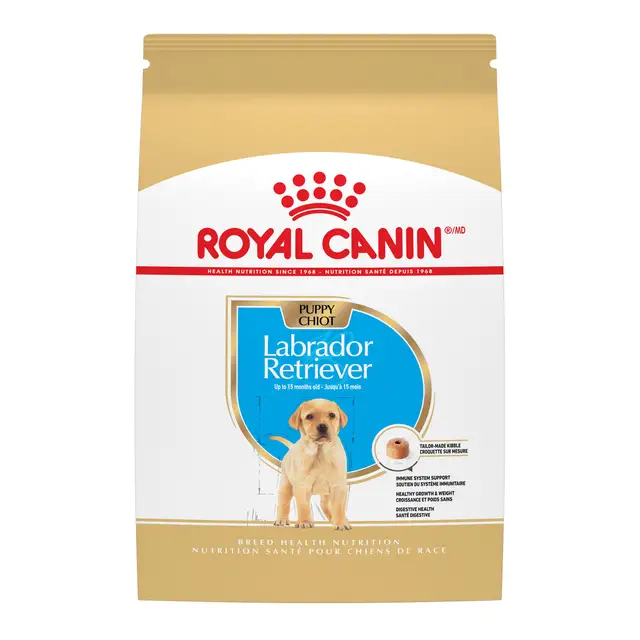
Product: Royal Canin Breed Health Nutrition Labrador Retriever Puppy Dry Dog Food
Bag size: 30 lb
Price: About $104.99, or $3.50 per pound
Customer rating: 4.8 out of 5 stars from 137 reviews
Life stage: Labrador Retriever puppies up to 15 months old
Our rating: 4.4 out of 5
Where to find it: available at Royal Canin
Disclosure: This article may contain affiliate links. If you purchase through one of these links, we may earn a commission at no additional cost to you. We have not personally tested this food. Our assessment is based on the current formula, nutritional information, manufacturer specifications, and available customer ratings.
Our Quick Verdict
Royal Canin Labrador Retriever Puppy Dry Dog Food is a thoughtfully formulated option for purebred Labrador puppies from weaning through 15 months of age.
Its strongest feature is not simply that it has a Labrador pictured on the bag. The formula meets AAFCO nutritional profiles for puppy growth, including the growth of large dogs expected to weigh at least 70 pounds as adults. It also provides controlled calories, specified calcium and phosphorus levels, prebiotics, and a kibble shape designed for Labradors that tend to eat quickly.
The downside is its premium price. At approximately $104.99 for a 30-pound bag, it is considerably more expensive than many general large-breed puppy foods. It also contains chicken, corn, rice, and wheat gluten, making it inappropriate for puppies with certain diagnosed food sensitivities.
Overall, it is a strong choice for healthy Labrador puppies when owners value breed-specific kibble and carefully controlled large-breed puppy nutrition—and when the price comfortably fits the household budget.
Royal Canin Labrador Retriever Puppy Food at a Glance
| Feature | Details |
|---|---|
| Food type | Dry puppy food |
| Best for | Purebred Labrador Retriever puppies |
| Recommended age | Up to 15 months |
| Bag size | 30 lb |
| Main protein ingredient | Chicken by-product meal |
| Crude protein | 31% minimum |
| Crude fat | 12% minimum |
| Crude fiber | 3.8% maximum |
| Moisture | 10.5% maximum |
| Calories | 307 kcal per cup |
| Calcium | 1.08% minimum |
| Phosphorus | 0.9% minimum |
| AAFCO statement | Formulated for growth, including large-size dogs |
| Customer rating | 4.8/5 from 137 reviews |
What We Like
- Formulated specifically for growing Labrador Retrievers
- Meets AAFCO profiles for large-breed puppy growth
- Provides 31% minimum crude protein
- Controlled calorie density supports measured feeding
- Declares calcium and phosphorus levels
- Specialized kibble encourages chewing
- Includes prebiotics and several fiber sources
- Contains fish oil, glucosamine, and chondroitin
- Complete and balanced for daily feeding
- Excellent 4.8-star customer rating
What Could Be Better
- Expensive at approximately $3.50 per pound
- Available in only a large 30-pound bag on the official US page
- Contains chicken and egg, which may not suit sensitive puppies
- Contains corn, rice, wheat gluten, and other grain ingredients
- Not a limited-ingredient formula
- Breed-specific food is not essential for every Labrador
- Kibble alone cannot prevent fast eating
- Glucosamine and chondroitin amounts should not be treated as therapeutic doses
Is This Really a Breed-Specific Formula?
Royal Canin markets this food specifically for purebred Labrador Retriever puppies. Its breed-focused approach centers on three practical considerations: growth, weight management, and eating behavior.
Labradors grow into powerful, relatively large dogs and are often enthusiastic eaters. The formula therefore combines a moderate calorie density with controlled minerals and a specially shaped kibble.
The manufacturer says the cylinder- or donut-shaped pieces are designed to slow ingestion and encourage chewing. This is a reasonable design feature, although individual results will vary. A determined puppy may still swallow food quickly and need a slow-feeder bowl or smaller, more frequent meals.
A healthy Labrador does not necessarily require food with its breed name on the bag. A high-quality large-breed puppy food can also meet the breed’s nutritional needs. What matters most is the nutritional adequacy statement, calorie intake, mineral balance, body condition, and how the individual puppy responds to the food.
Ingredient Analysis
The first ingredients are the following:
- Chicken by-product meal
- Brewers rice
- Brown rice
- Corn
- Wheat gluten
- Chicken fat
- Natural flavors
- Corn protein meal
- Dried plain beet pulp
- Pea fiber
Chicken By-Product Meal
Chicken by-product meal is the first ingredient and a concentrated animal-protein source. The term “by-product” sometimes concerns pet owners, but it does not automatically mean the ingredient is nutritionally poor.
By-products can include nutrient-rich animal tissues other than ordinary skeletal muscle. AAFCO explains that defined animal by-products exclude items such as hair, horns, teeth, and hooves. The word should therefore be evaluated as a regulated ingredient name, not treated as proof of low quality. AAFCO provides more information about by-products here.
However, this formula is unsuitable for a puppy with a confirmed chicken allergy unless a veterinarian specifically recommends it.
Rice, Corn, and Wheat Gluten
Brewer’s rice, brown rice, corn, and wheat gluten supply carbohydrates, energy, protein, or structure to the kibble. These ingredients make the product grain-inclusive.
Grains are not inherently unhealthy for dogs, and their presence does not automatically make a food low quality. However, owners seeking a grain-free or limited-ingredient formula will need another option.
Wheat gluten and corn protein meal also contribute to the total protein percentage, so the listed 31% crude protein does not come exclusively from animal ingredients.
Chicken Fat and Fish Oil
Chicken fat provides concentrated energy and essential fatty acids. Fish oil supplies marine-derived omega-3 fatty acids, although Royal Canin does not list a guaranteed DHA or total omega-3 level on the current US product page.
Because the exact omega-3 amount is not guaranteed, we would not choose this food solely for its fish-oil content.
Fiber and Prebiotics
Dried beet pulp, pea fiber, powdered psyllium husk, and fructooligosaccharides provide a mixture of fermentable and non-fermentable fibers.
Royal Canin includes these ingredients to support digestion, intestinal bacteria, and stool quality. They may be helpful for many puppies, but no food can guarantee perfect digestion. Any diet change can temporarily cause soft stool, especially when made too quickly.
Nutritional Analysis
According to the current Royal Canin product information, the guaranteed analysis includes:
| Nutrient | Guaranteed amount |
|---|---|
| Crude protein | 31% minimum |
| Crude fat | 12% minimum |
| Crude fiber | 3.8% maximum |
| Moisture | 10.5% maximum |
| Calcium | 1.08% minimum |
| Phosphorus | 0.9% minimum |
| Vitamin E | 420 IU/kg minimum |
| Vitamin C source | 320 mg/kg minimum |
| Glucosamine | 788 mg/kg minimum |
| Chondroitin sulfate | 8 mg/kg minimum |
The food contains 3,567 kcal per kilogram or approximately 307 kcal per cup on an as-fed basis.
Protein and Fat
The 31% minimum crude protein level is substantial for a puppy food, while the 12% minimum fat level keeps the formula from being excessively energy-dense.
Numbers on a guaranteed analysis do not reveal digestibility or overall food quality by themselves. Still, this protein-and-fat combination appears appropriate for supporting growth while allowing owners to control calorie intake.
Calcium and Phosphorus
Large-breed puppies require particular attention to mineral and calorie intake because overly rapid growth is undesirable.
Royal Canin declares at least 1.08% calcium and 0.9% phosphorus. More importantly, its nutritional adequacy statement says the formula meets AAFCO profiles for growth, including large-size dogs expected to weigh 70 pounds or more as adults.
That statement is more useful than relying on marketing language such as “supports healthy bones.” AAFCO specifically distinguishes formulas intended for large-breed puppy growth because those foods must comply with relevant nutrient limits. Learn how AAFCO nutritional adequacy statements work.
Owners should not add calcium supplements unless instructed by a veterinarian. Adding extra minerals to an already complete puppy food may unbalance the diet.
Specialized Kibble for Fast Eaters
Royal Canin uses a hollow, cylinder-shaped kibble intended to make Labrador puppies slow down and chew.
This is one of the product’s more distinctive features. Labradors can be extremely food-motivated, and a larger or unusually shaped piece may reduce how quickly some puppies scoop up their meals.
It is not a guaranteed solution for gulping, however. If your puppy still finishes meals too quickly, try:
- Dividing the daily portion into three meals
- Using a slow-feeder bowl
- Feeding part of the meal through a puzzle toy
- Spreading kibble across a snuffle mat
- Using individual pieces for reward-based training
Always supervise food puzzles, especially with puppies that chew or swallow non-food materials.
Digestive Support
Royal Canin describes the formula’s proteins as highly digestible and combines them with prebiotics and fiber to promote healthy digestion and stool quality.
The ingredient list supports the presence of these components, but the puppy’s response is what ultimately matters. Positive signs include the following:
- Consistently formed stool
- Minimal excessive gas
- A healthy appetite
- Steady, appropriate growth
- A shiny coat and healthy skin
- No persistent vomiting or diarrhea
Contact your veterinarian if your puppy develops recurring digestive problems, poor growth, intense itching, repeated ear problems, or other concerning symptoms.
Customer Reviews
The Royal Canin website lists an average rating of 4.8 out of 5 stars from 137 reviews. This is an excellent overall score and suggests a high level of owner satisfaction.
Customer ratings can help reveal broad patterns, but they cannot prove that a food is ideal for every puppy. Reviews are also influenced by factors such as palatability, delivery experience, packaging, and individual expectations.
A food that works perfectly for one Labrador may cause digestive upset or poor appetite in another. Your puppy’s body condition and veterinary assessments are more important than the average star rating.
How Much Should You Feed?
The correct portion depends on your puppy’s
- Age
- Current weight
- Expected adult weight
- Activity level
- Body condition
- Treat intake
- Neuter status
- Individual metabolism
Use the feeding chart on the current bag as a starting point, not an unchangeable rule. Measure meals rather than leaving food available all day, especially for a food-motivated breed such as the Labrador.
Royal Canin lists the food at 307 calories per cup, so treats and chews must also be included in your puppy’s daily calorie intake. Ask your veterinarian to help adjust portions during routine growth checks.
Your Labrador should grow steadily without becoming round or heavy. You should generally be able to feel the ribs beneath a light covering of tissue and see a waist when looking from above.
Transitioning to Royal Canin
Change foods gradually to reduce the likelihood of digestive upset. A typical transition can take seven to ten days:
| Days | Previous food | Royal Canin |
|---|---|---|
| 1–2 | 75% | 25% |
| 3–4 | 50% | 50% |
| 5–6 | 25% | 75% |
| 7 onward | 0% | 100% |
Some puppies with sensitive digestion may need a slower transition. If vomiting, persistent diarrhea, loss of appetite, or unusual lethargy occurs, contact your veterinarian.
How Long Does a 30-Pound Bag Last?
The answer depends on your puppy’s daily portion. A 30-pound bag contains approximately 13,608 grams of food.
To estimate how long it will last:
13,608 ÷ grams fed per day = approximate number of days
For example, if the feeding guide recommends 400 grams per day:
13,608 ÷ 400 = approximately 34 days
Check the bag for the correct daily amount for your puppy. Keep the food in its original packaging inside an airtight container and store it in a cool, dry location.
Who Should Buy This Food?
Royal Canin Labrador Retriever Puppy Food may be a good choice for:
- Purebred Labrador puppies up to 15 months old
- Owners seeking food formulated for large-breed growth
- Puppies that tend to eat very quickly
- Owners who prefer a grain-inclusive formula
- Puppies that tolerate chicken and grains
- Owners willing to pay more for breed-specific nutrition
- Households that can use a 30-pound bag while it remains fresh
Who Should Consider Another Food?
A different formula may be better if
- Your puppy has a confirmed chicken sensitivity
- Your veterinarian recommends a therapeutic or elimination diet
- You need a limited-ingredient recipe
- You prefer a smaller trial bag
- The premium price is difficult to maintain
- Your puppy refuses the kibble
- You have a mixed-breed puppy whose expected adult size is uncertain
- Your puppy has a medical condition requiring individualized nutrition
Is It Worth the Price?
At about $104.99 for a 30-pound bag, this is undeniably expensive. Owners are paying for Royal Canin’s breed-specific formulation, specialized kibble, large-breed growth profile, and extensive nutrient fortification.
It may be worth the cost if your Labrador enjoys it, digests it well, maintains a healthy body condition, and benefits from the specialized kibble.
However, it is not the only appropriate food for a Labrador puppy. A less expensive large-breed puppy formula that meets AAFCO growth profiles and works well for your dog can also be a responsible choice.
Consistency matters. It is better to choose a nutritionally complete food you can afford throughout puppyhood than repeatedly switch between premium and budget formulas.
Frequently Asked Questions
Is Royal Canin Labrador puppy food complete and balanced?
Yes. Royal Canin states that it is formulated to meet AAFCO Dog Food Nutrient Profiles for growth, including the growth of large-size dogs expected to weigh at least 70 pounds as adults.
Is it suitable for all puppy breeds?
It is nutritionally formulated for growth but designed specifically for Labrador retrievers. Owners of other breeds should choose a formula appropriate for their puppy’s expected adult size and individual needs.
Until what age should a Labrador eat this food?
Royal Canin recommends it for Labrador Retriever puppies up to 15 months old. Discuss the transition to adult food with your veterinarian because individual growth rates vary.
Does it contain chicken?
Yes. Chicken by-product meal and chicken fat are prominent ingredients. The formula also contains egg products.
Is it grain-free?
No. It contains brewers’ rice, brown rice, corn, and wheat gluten.
Does it contain glucosamine?
Yes. The guaranteed analysis lists at least 788 mg/kg of glucosamine and 8 mg/kg of chondroitin sulfate. These ingredients should not be treated as substitutes for veterinary care or therapeutic joint supplements.
Is the food good for sensitive stomachs?
It contains prebiotics and several fiber sources, but it is not a limited-ingredient or veterinary gastrointestinal diet. Whether it suits a sensitive puppy depends on the cause of the symptoms and the puppy’s individual response.
Will the kibble stop my Labrador from eating too quickly?
Its specialized shape may encourage slower eating and chewing, but it will not work for every puppy. A slow-feeder bowl or food puzzle may still be necessary.
Final Verdict
Royal Canin Labrador Retriever Puppy Dry Dog Food earns high marks for its large-breed growth adequacy, controlled calorie content, declared mineral levels, digestive-support ingredients, and Labrador-specific kibble.
The formula is complete and balanced, and its 4.8-star average from 137 customer reviews is encouraging. Its most significant drawback is price, followed by a long ingredient list that will not suit every puppy or every owner’s preferences.
If your Labrador puppy tolerates chicken and grains, enjoys the kibble, and maintains a healthy growth rate on it, this is a well-designed option through approximately 15 months of age.
Our rating: 4.4 out of 5