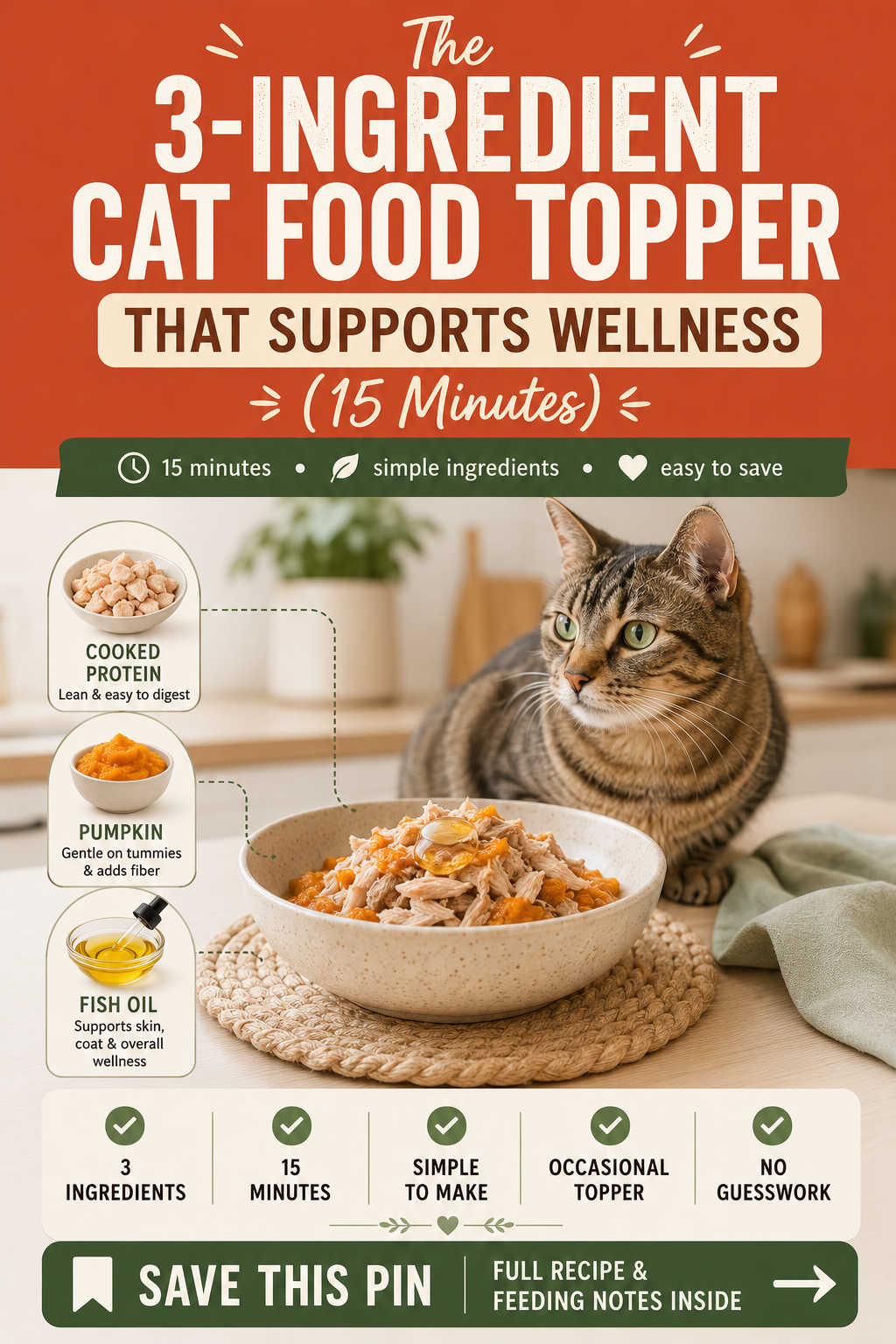
Easy Homemade Cat Food Topper Recipe with Chicken and Pumpkin
A Simple Homemade Cat Food Topper Recipe for Cats Eating Complete & Balanced Diets
Prep Time: 15 minutes
Cook Time: 15–20 minutes
Total Time: About 35 minutes
Yield: Approximately 6–8 small topper servings
Looking for a Simple Homemade Cat Food Topper Recipe?

If you enjoy preparing fresh food at home, you may wonder whether you can make something special for your cat, too.
The good news is that you can—but it’s important to understand what a homemade topper is and what it isn’t.
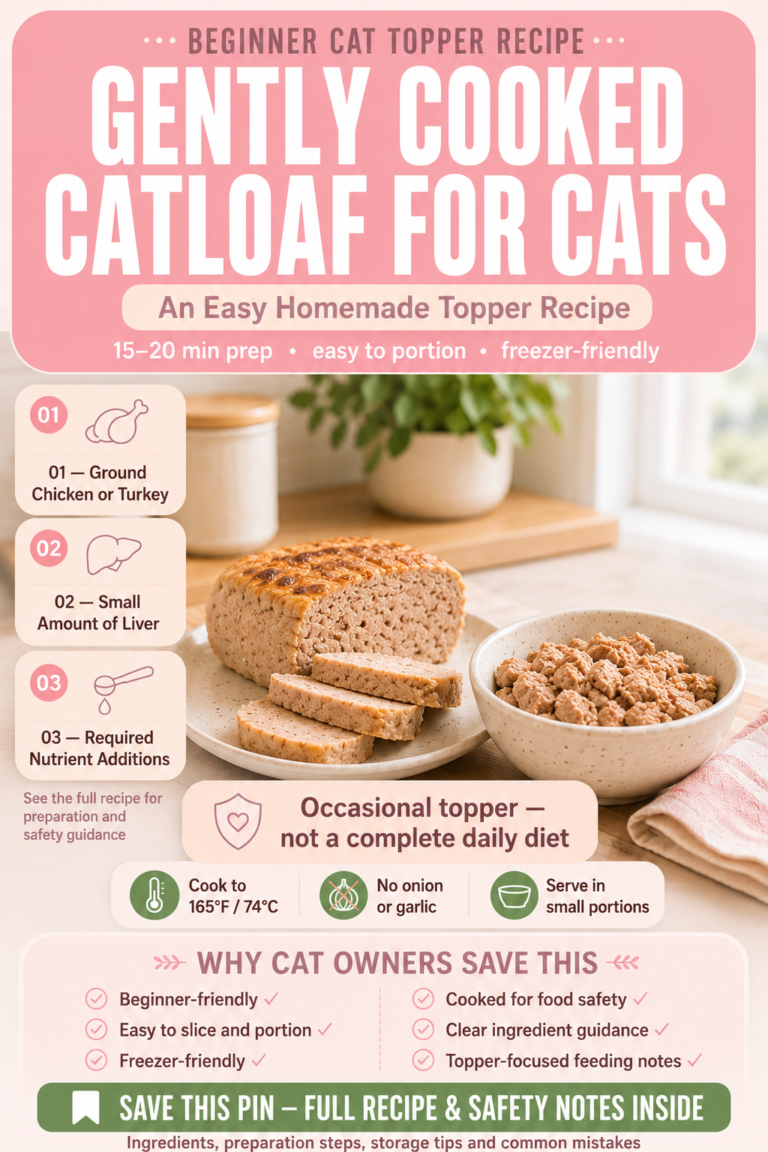
This easy 3-ingredient cat food topper is designed to add a little variety, moisture, and flavor to your cat’s regular meals. It is not intended to replace a complete and balanced commercial cat food or a home-prepared diet formulated by a board-certified veterinary nutritionist.
Cats have unique nutritional requirements. Unlike humans and even dogs, they are obligate carnivores, meaning they rely on nutrients found naturally in animal tissues. Essential nutrients such as taurine, arginine, arachidonic acid, vitamin A, vitamin D, and specific minerals must be supplied in the proper amounts every day. A simple homemade recipe cannot reliably provide all of these nutrients in the correct balance.
That’s why veterinary organizations, including Cornell Feline Health Center, WSAVA, and Tufts Petfoodology, recommend feeding a complete and balanced diet as your cat’s primary nutrition.
Think of this recipe the same way you might think of adding fresh herbs to your own dinner—it adds interest and variety, but it doesn’t replace the meal itself.
Why This Recipe Uses Only Three Ingredients
One of the biggest mistakes cat owners make is assuming that more ingredients automatically create a healthier recipe.
In reality, adding numerous ingredients without understanding feline nutrition can make homemade foods less predictable and harder to digest.
This recipe intentionally keeps things simple.
Each ingredient has a specific purpose and is commonly found in feline nutrition discussions because of its nutritional profile or practical benefits.
Ingredient 1: Plain Cooked Chicken Breast
Why it’s included
Chicken is a highly digestible source of animal protein that many cats enjoy.
Protein helps support normal muscle maintenance and supplies amino acids that cats require for everyday body functions.
For this recipe, use only:
✔ Boneless chicken breast
✔ Skinless
✔ Plain
✔ Thoroughly cooked
Never use:
- Salt
- Garlic
- Onion
- Butter
- Cooking oils
- Marinades
- BBQ sauce
- Herbs or spices
These ingredients are unnecessary, and some—particularly onion and garlic—can be toxic to cats.
Ingredient 2: Plain Pumpkin Purée
Choose 100% plain canned pumpkin with no added sugar, spices, or flavorings.
Do not use pumpkin pie filling.
Pumpkin provides dietary fiber and moisture. Small amounts of fiber may help support normal digestive function in some cats, although not every cat needs extra fiber.
Because every cat is different, introduce pumpkin gradually and discontinue use if it doesn’t agree with your cat.
Ingredient 3: Salmon Oil (Optional)
A veterinary-formulated salmon oil provides omega-3 fatty acids that help support normal skin and coat health.
This ingredient is optional.
Because fish oil products vary considerably in concentration, always follow the manufacturer’s feeding directions or your veterinarian’s advice.
Never estimate supplement amounts.
Ingredients
- ½ cup finely shredded plain cooked chicken breast
- 1 tablespoon plain canned pumpkin (100% pumpkin)
- Salmon oil formulated for pets (optional; use only according to the product label)
Helpful Kitchen Tools
You don’t need speciality equipment to prepare this recipe, but a few basic kitchen tools can make preparation safer, more accurate, and more convenient.
Instant-Read Food Thermometer
An instant-read thermometer helps ensure the chicken reaches the recommended safe internal temperature without overcooking.
Digital Kitchen Scale
If you prepare homemade food regularly, a digital kitchen scale makes measuring ingredients much more consistent than estimating by volume.
Glass Meal-Prep Containers
Small glass containers with airtight lids are ideal for refrigerating or freezing individual portions.
Stainless-Steel Measuring Spoons
Useful for accurately measuring pumpkin and any optional supplements.
Recommended Reading: Before preparing homemade foods for your cat, learn how to read a pet-food label in our Best Cat Food Guide for First-Time Owners.
Step-by-Step Instructions
Step 1: Cook the Chicken Safely
Place the boneless, skinless chicken breast in a saucepan, skillet, or baking dish.
Cook without:
- Salt
- Garlic
- Onion
- Butter
- Oil
- Herbs
- Seasonings
- Sauces
Using an instant-read food thermometer, check the thickest part of the chicken. According to the U.S. Department of Agriculture (USDA), poultry should reach an internal temperature of 165°F (74°C) to help ensure harmful bacteria are destroyed.
Once the chicken reaches 165°F (74°C):
- Transfer it to a clean plate (never reuse the plate that held the raw chicken).
- Allow it to cool for 15–20 minutes, or until it reaches room temperature.
- If you are not using it immediately, refrigerate it promptly in a covered container.
Never serve hot food to your cat, as it could burn its mouth. The topper should be served at room temperature or slightly chilled, depending on your cat’s preference.
Food Safety Tip: Wash your hands, knife, cutting board, and utensils with hot, soapy water after handling raw poultry to reduce the risk of cross-contamination.
Step 2: Shred the Chicken
Using two forks or a clean knife, finely shred the cooled chicken into small, bite-sized pieces.
Cats generally find finely shredded meat easier to eat than large chunks, and it mixes more evenly with their regular food.
Step 3: Add the Pumpkin
Place the shredded chicken in a clean mixing bowl.
Add 1 tablespoon of plain canned pumpkin and gently mix until the pumpkin lightly coats the chicken.
The goal isn’t to create a purée but to evenly distribute the pumpkin throughout the chicken.
Step 4: Add the Salmon Oil (Optional)
If you’re using salmon oil, add only the amount recommended on the product label for your cat’s size or as directed by your veterinarian.
Mix gently to coat the chicken evenly.
If your cat has never had fish oil before, introduce it gradually and monitor for digestive upset.
Step 5: Serve as an Occasional Topper
Spoon a small amount over your cat’s usual complete and balanced food.
Avoid replacing the entire meal with this recipe.
Introduce any new food gradually over several days, especially if your cat has a sensitive stomach.
Feeding Guide
This recipe is intended as an occasional topper, not as a complete meal.
Veterinary nutrition experts generally recommend that treats and toppers contribute no more than about 10% of your cat’s total daily calorie intake, with the remaining calories coming from a nutritionally complete and balanced diet.
If you’re adding this topper regularly, you may need to slightly reduce the amount of your cat’s regular food to help avoid excess calorie intake.
Not Sure How Many Calories Your Cat Needs?
Every cat’s calorie needs are different and depend on factors such as the following:
- Age
- Body weight
- Activity level
- Body condition
- Indoor vs. outdoor lifestyle
- Spay or neuter status
Instead of guessing, use our free Cat Calorie Calculator to estimate your cat’s daily calorie requirements and help determine how treats and toppers fit into their overall diet.
➡️ Calculate Your Cat’s Daily Calories Here
Part 2: Storage, Food Safety, FAQs & Veterinary Guidance
How to Store Homemade Cat Food Topper Recipe Safely
Because this topper contains cooked chicken, proper storage is essential to help reduce the risk of bacterial growth and maintain freshness.
Refrigeration
Transfer any leftovers to a clean, airtight container as soon as the mixture has cooled.
Store in the refrigerator at 40°F (4°C) or below and use within 3 days.
Avoid leaving the topper at room temperature for more than 2 hours (or 1 hour if the room temperature exceeds 90°F/32°C), following USDA food safety guidance.
Our Favorite Storage Tip: Portion the topper into individual servings before refrigerating. This makes feeding easier and reduces repeated handling of the food.
Freezing Instructions
If you’ve prepared a larger batch, freezing individual portions can save time.
To Freeze
- Divide the topper into single-meal portions.
- Place portions into freezer-safe containers or silicone freezer trays.
- Label each container with the preparation date.
- Freeze for up to 2–3 months for best quality.
To Thaw
Move a frozen portion to the refrigerator the night before feeding.
Never thaw cooked chicken on the kitchen counter.
Once thawed:
- Stir gently.
- Check that the food smells fresh.
- Serve at room temperature or slightly chilled.
Do not refreeze thawed leftovers.
Recommended products
Homemade Cat Food Safety Checklist
Before serving any homemade topper, ask yourself:
✅ The chicken was cooked to 165°F (74°C)
✅ No onion or garlic was added
✅ No salt or seasonings were used
✅ The topper is served with a complete and balanced cat food
✅ The food has been refrigerated properly
✅ Fresh drinking water is available
If you cannot check every box, it’s safer not to serve the topper.
Common Homemade Feeding Mistakes
Many cat owners have good intentions when preparing homemade foods, but several common mistakes can unintentionally create nutritional problems.
1. Replacing Complete Cat Food
The biggest mistake is feeding homemade toppers instead of a nutritionally complete cat food.
Cats require precise amounts of the following:
- Taurine
- Arginine
- Calcium
- Phosphorus
- Vitamin A
- Vitamin D
- Essential fatty acids
- Trace minerals
These nutrients are difficult to balance without professional formulation.
2. Guessing Portions
Adding “just a little more” each day can quickly increase calorie intake.
Even healthy foods contribute calories.
Using measuring spoons—or better yet, a digital kitchen scale—helps keep portions consistent.
3. Using Unsafe Ingredients
Never add:
- Onion
- Garlic
- Chives
- Leeks
- Grapes
- Raisins
- Chocolate
- Alcohol
- Macadamia nuts
- Xylitol
- Salt
- Butter
- BBQ sauce
- Gravy
- Seasonings
Many common human ingredients are unsafe for cats.
4. Making Sudden Diet Changes
Cats often prefer routine.
Introduce any new topper gradually over several days.
Watch for:
- Vomiting
- Diarrhea
- Constipation
- Reduced appetite
If digestive upset continues, discontinue the topper and contact your veterinarian.
Frequently Asked Questions
Can I feed this topper every day?
This recipe is designed as an occasional topper, not a complete diet.
If you’d like to prepare all of your cat’s meals at home, consult your veterinarian or a board-certified veterinary nutritionist to develop a nutritionally complete recipe.
Can kittens eat this recipe?
Kittens have unique nutritional requirements to support growth and development.
Before offering homemade foods to kittens, discuss their diet with your veterinarian.
Can senior cats eat this?
Many healthy senior cats may enjoy an occasional topper.
However, older cats are more likely to have medical conditions that require specific diets.
Always ask your veterinarian before changing the diet of a senior cat.
Can I substitute turkey?
Yes.
Plain cooked turkey breast can usually be substituted for chicken.
Prepare it exactly the same way:
- Boneless
- Skinless
- Thoroughly cooked
- No seasoning
Can I use canned chicken?
Freshly cooked chicken is generally the better choice.
Many canned chicken products contain added sodium, broth, or seasonings that are not appropriate for cats.
Always read the ingredient label carefully.
My cat won’t eat pumpkin. What should I do?
Some cats simply don’t enjoy pumpkin.
You can leave it out rather than forcing the issue.
Remember, the topper is optional and intended only to complement your cat’s regular food.
How much topper should I add?
Start with 1–2 teaspoons mixed into your cat’s regular meal.
Observe how your cat responds before increasing the amount.
As a general guideline, treats and toppers should make up no more than about 10% of daily calorie intake.
👉 Use our free cat calorie calculator to estimate your cat’s daily calorie needs and help keep treats and toppers in balance.
When to Contact Your Veterinarian
Stop feeding the topper and contact your veterinarian if your cat
- Stops eating for 24 hours (or sooner for kittens)
- Vomits repeatedly
- Has diarrhea lasting more than 24 hours
- Develops constipation
- Loses weight unexpectedly
- Becomes unusually lethargic
- Shows signs of pain while eating
- Has a chronic medical condition requiring a prescription diet
Cats can become seriously ill if they stop eating, so a reduced appetite should never be ignored.
Final Thoughts
Preparing a simple homemade topper can be a fun way to add variety to your cat’s meals, but it’s important to keep it in perspective.
A topper should enhance your cat’s diet—not replace it.
By using plain, carefully prepared ingredients; practicing safe food handling; and continuing to feed a complete and balanced diet, you can enjoy making occasional homemade additions while supporting your cat’s overall nutritional needs.
When in doubt, your veterinarian is the best source of guidance for your individual cat’s health, especially if they have allergies, digestive issues, or chronic medical conditions.
References
- Cornell Feline Health Center. Feeding Your Cat. https://www.vet.cornell.edu/departments-centers-and-institutes/cornell-feline-health-center/health-information/feline-health-topics/feeding-your-cat
- Cornell University Hospital for Animals, Nutrition Service. https://www.vet.cornell.edu/hospitals/services/nutrition
- Cornell Feline Health Center. How Often Should You Feed Your Cat? https://www.vet.cornell.edu/departments-centers-and-institutes/cornell-feline-health-center/health-information/feline-health-topics/how-often-should-you-feed-your-cat
- Tufts University Cummings School of Veterinary Medicine. Petfoodology. https://vetnutrition.tufts.edu/
- World Small Animal Veterinary Association (WSAVA). Global Nutrition Toolkit. https://wsava.org/global-guidelines/global-nutrition-guidelines/
- Association of American Feed Control Officials (AAFCO). Pet Food Labelling & Nutritional Adequacy. https://www.aafco.org/
- U.S. Department of Agriculture (USDA) Food Safety and Inspection Service. Safe Minimum Internal Temperature Chart. https://www.fsis.usda.gov/food-safety/safe-food-handling-and-preparation/food-safety-basics/safe-temperature-chart